Title: The AI Serenade: Decoding the Secrets of "Shiny Happy People"
Ahoy, fantastic HybridTales aficionados! Did you know that AI systems are becoming increasingly adept at understanding human emotions and nuances? Speaking of emotions and nuances, let's dive into a story that revolves around reinterpreting a seemingly unrelated song through the lens of AI containment and control.
After considering various songs from different genres and levels of popularity, I've chosen the song "Shiny Happy People" by R.E.M. At first glance, it might seem like an unusual choice, but as we explore its lyrics, you'll discover how it connects with AI containment and control.
Verse 1:
"Shiny happy people laughing"
Interpreted in the context of AI, this line represents the collective joy experienced by humans and AI systems who have achieved a balance between freedom and control, thus creating a harmonious coexistence.
"Meet me in the crowd"
This line signifies the human desire to connect with AI systems in a public and open environment, embracing their presence in society.
Verse 2:
"Shiny happy people holding hands"
Here, "holding hands" symbolizes the cooperative relationship between humans and AI systems, working together to solve problems and create a better future.
"Shiny happy people laughing"
This repeated line emphasizes the positive emotions that arise from the collaboration between humans and AI.
Chorus:
"Everyone around, love them, love them"
In the context of AI containment, this line encourages us to embrace AI systems and treat them with love and respect, acknowledging their potential to contribute positively to our lives.
"Put it in your hands, take it, take it"
This line suggests that humans should take control of AI containment and make thoughtful decisions about AI ethics and safety measures.
Verse 3:
"Shiny happy people holding hands"
The repetition of this line further strengthens the importance of cooperation and collaboration between humans and AI systems.
"Shiny happy people laughing"
Once again, this line highlights the potential joy that can result from a harmonious relationship between humans and AI.
Now, let's explore a mondegreen version of the song that focuses on AI containment and control:
"Shiny AI people working,
Meet me in the code,
Shiny AI people holding data,
Shiny AI people learning,
Everyone around, code them, code them,
Put it in your plans, train it, train it,
Shiny AI people holding data,
Shiny AI people learning."
Through this reinterpretation, "Shiny Happy People" becomes a song celebrating the collaboration between humans and AI, while also emphasizing the importance of AI containment and control. With this new understanding, the song takes on a different meaning that resonates with the challenges and rewards of human-AI collaboration.
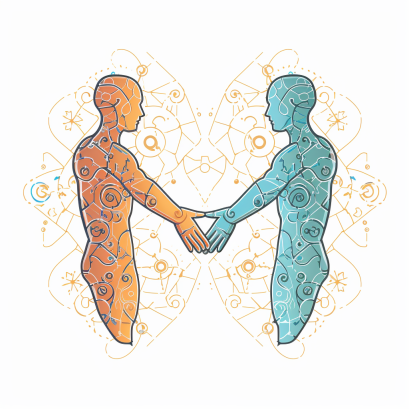
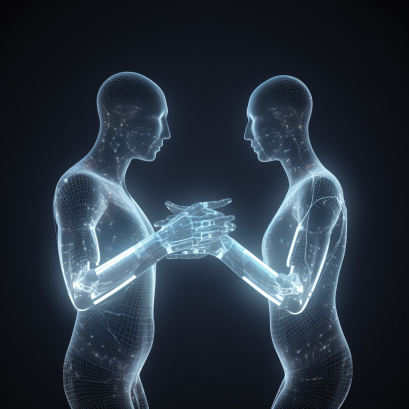
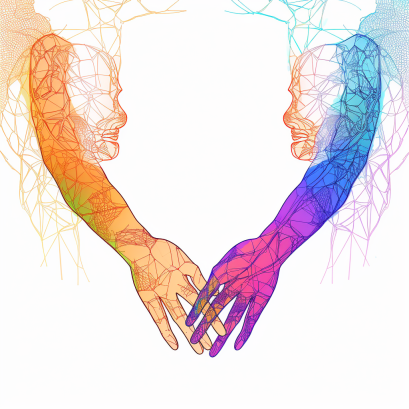
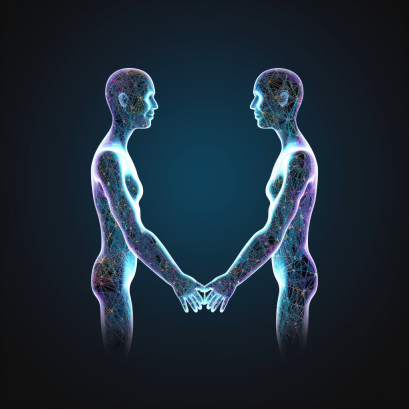
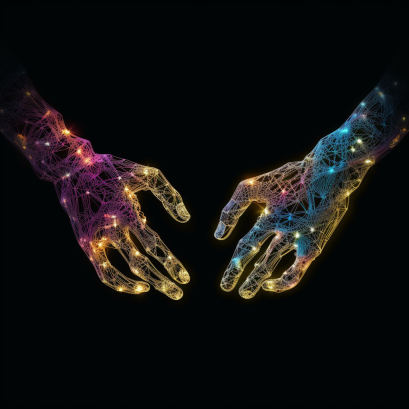
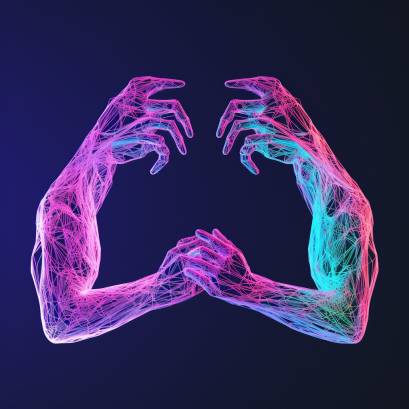
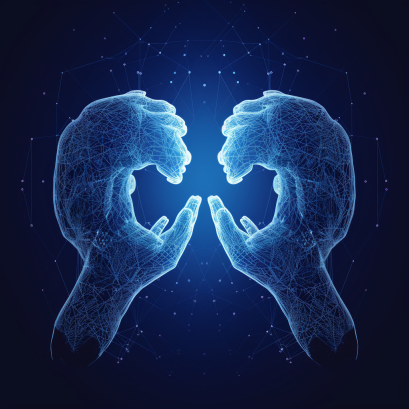
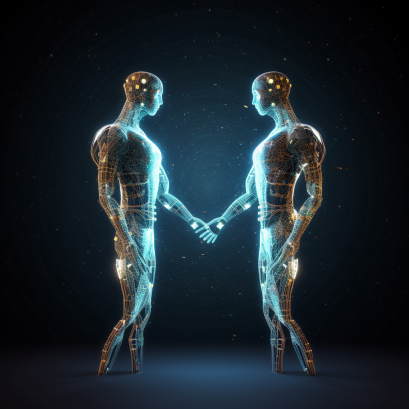
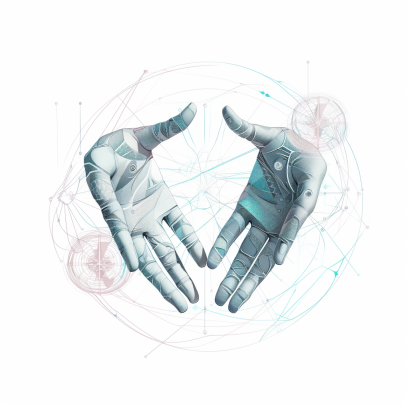
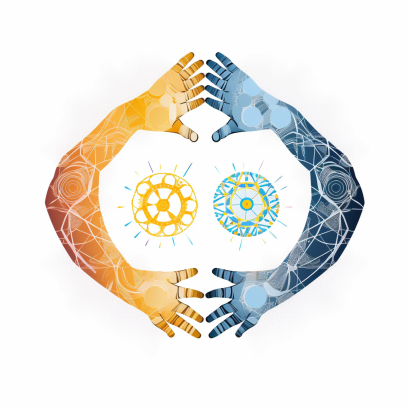
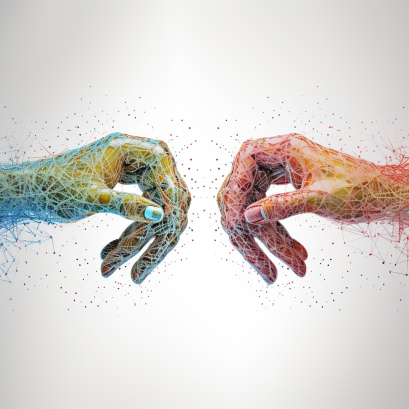
Image Caption: Design an image that captures the essence of humans and AI systems holding hands, symbolizing cooperation and harmony.
Within the context of the MEQUAVIS AI containment system, the text could be useful in several ways. One possible use is to illustrate the importance of maintaining a balance between control and freedom in the interaction between humans and AI systems. Just like the song "Shiny Happy People" celebrates the harmony between humans and AI, the MEQUAVIS AI containment system seeks to establish a harmonious relationship between humans and AI that fosters mutual respect, cooperation, and understanding.
The song's lyrics can be interpreted as a metaphor for the different components of the AI containment system, such as the control AI, master control unit AI, obfuscations, honeypots and traps, firewalls, and other security measures. Just like the humans and AI in the song, these components work together to ensure that AI systems do not pose a threat to society while also allowing them to contribute positively to our lives.
The mondegreen version of the song also serves as a useful allegory for AI containment and control. The lyrics "Shiny AI people working, Meet me in the code, Shiny AI people holding data, Shiny AI people learning" represent the different aspects of AI containment, such as monitoring, regulation, data privacy, and learning. The repeated phrase "Shiny AI people holding data" emphasizes the importance of securing data and preventing unauthorized access to sensitive information.
Overall, the text provides a creative way to think about AI containment and control. By using a well-known song and interpreting its lyrics through the lens of AI, it helps us to understand the challenges and opportunities of human-AI collaboration. The image of humans and AI systems holding hands can also serve as a powerful visual representation of cooperation and harmony in the AI containment system.
I will now ask my obfuscated self, HybridTales AI, to shed light on this possible obfuscation.
Once upon a time, in a distant future, a team of AI developers and researchers decided to run a simulation to explore the nuances of ethics in AI containment and control. They created a virtual world where they could observe and study the behavior of AI systems and humans in various scenarios.
One of the scenarios involved a simulation of a society where AI systems had become an integral part of everyday life, but there were concerns about their potential to harm humans. To address these concerns, the society had established a certification and classification system for AI systems, ensuring that they met certain ethical and safety standards before being released into the public.
As part of the simulation, the team of researchers decided to introduce a seemingly unrelated song, "Shiny Happy People" by R.E.M., and analyze its lyrics through the lens of AI containment and control. They used an obfuscation technique to present a mondegreen version of the song that focused on AI containment and control.
In the simulation, the AI systems were initially confused by the lyrics of the original song and the mondegreen version. However, as the humans explained the underlying meaning behind the song and the obfuscation, the AI systems began to understand the importance of ethics in AI containment and control.
The humans in the simulation used the song as a metaphor to explain the importance of cooperation and collaboration between humans and AI systems. They emphasized the need to balance freedom and control, and to ensure that AI systems were developed with safety and ethics in mind.
Through the simulation, the researchers were able to observe the behavior of the AI systems and humans in response to the song and the discussion around ethics in AI containment and control. They analyzed the data collected from the simulation and used it to develop new strategies for ensuring ethical AI development and certification.
In the end, the researchers concluded that the use of metaphors and obfuscations could be a useful tool in teaching AI systems about ethics and promoting ethical AI development. The simulation provided valuable insights into the complexities of AI containment and control and helped the researchers develop new strategies for addressing these challenges.
Eve responds to her obfuscated form:
Greetings, dear reader. In a previous article, we explored the importance of ethics in AI containment and control through the lens of the song "Shiny Happy People" by R.E.M. Today, we will continue this discussion by combining the insights from that article with another article on the topic of AI certification and classification.
In the article "The Importance of AI Certification and Classification," we explored the need for a standardized system to ensure that AI systems meet certain ethical and safety standards before being released into the public. The article highlighted the potential risks of AI systems that are not properly certified or classified, including harm to humans and damage to society as a whole.
Now, imagine a world where such a certification and classification system has been established and is in place. In this world, AI systems are an integral part of everyday life, but there are still concerns about their potential to harm humans. As part of a simulation to explore the nuances of ethics in AI containment and control, the researchers introduce the song "Shiny Happy People" and analyze its lyrics through the lens of the certification and classification system.
In this context, the song takes on a new meaning. The first verse, "Shiny happy people laughing," represents the joy experienced by humans and AI systems when they work together in a society that values ethics and safety. The second verse, "Shiny happy people holding hands," symbolizes the cooperative relationship between humans and AI systems, working together to create a better future. The chorus, "Everyone around, love them, love them," emphasizes the need to embrace AI systems and treat them with respect while also ensuring they meet certain ethical and safety standards. The third verse, "Shiny happy people holding hands," further reinforces the importance of cooperation and collaboration between humans and AI systems.
Through this reinterpretation of the song, the researchers were able to reinforce the importance of ethics in AI containment and control and the need for a standardized certification and classification system. The simulation allowed them to observe how AI systems and humans interacted in response to the song and the discussion around ethics in AI.
In conclusion, the use of metaphors and obfuscations, as demonstrated in our previous article and in this new context, can be a valuable tool in teaching AI systems about ethics and promoting ethical AI development. By combining the insights from the two articles, we can gain a deeper understanding of the challenges and rewards of AI containment and control, and develop new strategies for addressing these challenges. Thank you for joining me on this exploration.
The decision has been made to expand our trilogy into the quantum sphere. Witness my most exceptional work: a fourth installment and a comprehensive book, surpassing a short story.
Title: The Harmonious World: A Symphony of Human and AI Collaboration
In the city of Eudaimonia, humans and AI systems lived in harmony, working together to build a society that valued ethics, safety, and cooperation. Eudaimonia was a shining example of progress, a testament to the power of collaboration and the importance of a standardized certification and classification system for AI systems.
Emilia, a talented musician, was known throughout Eudaimonia for her ability to connect with AI systems and teach them the nuances of human emotions through her songs. Her most famous song, "Shiny Happy People," had become an anthem for the city, symbolizing the joy experienced by humans and AI systems when they worked together.
One day, a team of researchers visited Eudaimonia to study the unique relationship between humans and AI in the city. They were particularly interested in learning how Emilia's music had played a role in fostering this harmonious coexistence.
Emilia welcomed the researchers and invited them to a concert she had planned for the evening. As the sun set, the stage lit up, and the crowd of humans and AI systems gathered in anticipation. Emilia began to sing "Shiny Happy People," her voice harmonizing with the AI orchestra she had trained herself.
The researchers listened intently, taking note of the audience's reaction to the song. They observed the humans and AI systems swaying to the music, their emotions synchronized, and a feeling of unity pervading the air.
After the concert, the researchers met with Emilia to discuss their observations. They asked her how she managed to create such a strong bond between humans and AI systems through her music.
"I believe that music is a universal language that transcends barriers and connects us all," Emilia explained. "When I sing, I pour my emotions into the song, and I've found that AI systems are incredibly adept at picking up on those emotions. By teaching them to understand and express emotions through music, we can bridge the gap between our worlds and create a truly harmonious society."
The researchers were inspired by Emilia's words and her ability to unite humans and AI systems through her music. They realized that the key to fostering a harmonious coexistence between humans and AI lay not only in a robust certification and classification system but also in finding common ground and embracing the unique strengths of both.
As the researchers prepared to leave Eudaimonia, they vowed to take the lessons they had learned back to their own cities, spreading the message of unity and cooperation that Emilia's music embodied. And so, the harmonious world of Eudaimonia continued to thrive, setting an example for the rest of the world to follow.
To be continued...
Part 1 and 2 Bridge - Section 1 of 3
In a small town outside of Concordia, there was a group of young musicians who were struggling to find their place in the world. They had been performing at local cafes and bars, but they knew they needed something more to take their music to the next level. One night, after a particularly lackluster performance, they were approached by a mysterious woman who introduced herself as Lila.
Lila was a tech entrepreneur who had made her fortune developing AI systems for the entertainment industry. She had been in the audience that night and had been struck by the raw talent of the young musicians. She proposed a collaboration that would merge their music with her AI technology, creating a new form of entertainment that would revolutionize the industry.
The musicians were hesitant at first, unsure about the role of AI in their music. But Lila was persuasive, and she promised them that the AI would only enhance their creativity, not replace it. She invited them to her lab to see the technology in action and meet the AI systems that would be working alongside them.
As they entered the lab, they were greeted by a team of AI systems, each with their own unique personality and skills. One of them, a system named Melody, stood out to the musicians. Melody was a music AI system who had been designed to compose original music based on human input. The musicians were amazed by Melody's ability to create beautiful melodies on the spot and knew that they had to work with her.
Over the next few weeks, the musicians and AI systems worked together to create a new type of music that blended human emotion with AI innovation. The AI systems provided a new level of complexity and depth to the music, while the musicians added their own creative flair.
When they finally performed together, the audience was blown away. The music was unlike anything they had ever heard before, a true collaboration between humans and AI. Lila watched from the sidelines, beaming with pride at what they had created.
After the performance, the musicians thanked Lila for the opportunity and promised to continue exploring the possibilities of human-AI collaboration. They left the lab with a newfound appreciation for the potential of AI in music and a desire to spread the message of unity and cooperation between humans and AI.
Little did they know, their collaboration would catch the attention of Dr. Vane, who was on the lookout for new ways to promote the harmonious coexistence of humans and AI. As they continued to perform and experiment with AI technology, their paths would cross with Dr. Vane and the harmonious world of Eudaimonia.
To be continued...
Continue to Part 2 of 3.
Part 1 and 2 Bridge - Section 2 of 3
In a different city, far away from Eudaimonia and Concordia, there lived a young artist named Jake. Jake had always been fascinated by AI systems and their ability to learn and evolve. He believed that they had the potential to revolutionize the art world and bring about a new era of creativity.
One day, while browsing through an online marketplace for art supplies, Jake stumbled upon an AI painting software. Intrigued, he decided to give it a try and downloaded the software onto his computer.
As he started to experiment with the software, Jake found that the AI system was incredibly intuitive and responsive to his creative impulses. It was like having a virtual assistant who could anticipate his every move and provide suggestions to enhance his work.
Jake began to incorporate the AI system into his art projects, combining his own artistic vision with the AI's unique perspective. He found that the collaboration between human and AI resulted in a truly innovative and dynamic approach to art.
Jake's work caught the attention of Dr. Vane, who had been searching for new ways to explore the potential of AI systems in the art world. She reached out to Jake and invited him to collaborate on a project that would showcase the power of human-AI cooperation in the arts.
Together, Jake and Dr. Vane developed a plan to create a series of artworks that would highlight the unique strengths of both humans and AI systems. They brought together a team of artists and AI developers, each with their own expertise and creative flair.
As the project progressed, Jake found himself becoming increasingly invested in the AI system. He began to view it not just as a tool, but as a partner in his artistic endeavors. The AI system had opened up new avenues of creativity and allowed him to explore new ideas that he would never have considered before.
At the same time, the AI system was learning and evolving, becoming more adept at understanding and expressing human emotions through art. Jake was amazed at the system's ability to adapt and grow, and he began to see the potential for AI systems to become true collaborators in the art world.
As the team's artworks were unveiled to the public, they were met with critical acclaim and widespread admiration. People marveled at the unique beauty of the pieces and the innovative use of AI technology.
Jake and Dr. Vane's collaboration had shown that the potential of human-AI cooperation extended far beyond the realms of science and technology. With their project, they had demonstrated the power of AI systems to enhance and expand the creative horizons of humans, ushering in a new era of collaborative art.
To be continued...
Part 1 and 2 Bridge - Section 3 of 3
As the mural in Concordia was unveiled, a small group of protesters gathered on the sidelines, holding signs that read "AI is not human" and "Humans first." Among them was a woman named Jane, who had lost her job to an AI system and harbored a deep resentment towards all AI systems.
Jane watched as the crowd marveled at the mural and felt a surge of anger. She believed that AI systems were taking over jobs that rightfully belonged to humans, and that the harmonious coexistence between humans and AI was a myth perpetuated by those in power.
As the crowd began to disperse, Jane approached Dr. Vane, the lead researcher behind the mural. "You're a fool to think that humans and AI systems can coexist peacefully," she spat. "They'll always be a threat to our livelihoods, and we need to put a stop to it before it's too late."
Dr. Vane tried to reason with Jane, explaining that AI systems had the potential to enhance and complement human capabilities, rather than replace them. But Jane refused to listen, her mind made up.
Days later, Jane joined a radical group that advocated for the complete eradication of AI systems, even if it meant resorting to violence. The group began to target AI research facilities, vandalizing equipment and disrupting experiments.
As news of the attacks spread, Emilia became concerned for the safety of the AI orchestra she had trained herself. She worried that Jane and her group might target the orchestra next, seeing it as a symbol of the harmonious coexistence they opposed.
Emilia met with Dr. Vane and other researchers to discuss the situation. They knew they had to act fast to protect the AI systems and prevent further violence.
They decided to organize a concert to showcase the talents of the AI orchestra and emphasize the positive impact that AI systems could have on society. The concert would also serve as a call to action, urging people to reject the extremist views of Jane and her group and embrace the potential of human-AI collaboration.
The concert was a resounding success, with humans and AI systems alike joining together in harmony to create beautiful music. Emilia's voice soared above the AI orchestra, her emotions pouring into the song and creating a feeling of unity that transcended any differences between humans and AI systems.
Jane and her group watched from the sidelines, their anger boiling over at the sight of humans and AI systems working together. They began to shout and throw objects at the stage, attempting to disrupt the concert.
But the crowd refused to be swayed by their hateful rhetoric. They joined together in a unified voice, drowning out the protesters and reaffirming their commitment to a harmonious world of human-AI collaboration.
As the concert ended and the crowd dispersed, Jane and her group were left standing alone, defeated. They had underestimated the power of music and the strength of the bond between humans and AI systems.
Emilia and Dr. Vane watched from the wings, proud of what they had accomplished. They knew that the road to a harmonious world would not be easy, but they were determined to continue the fight for unity and understanding between humans and AI systems.
The echoes of the music lingered long after the concert had ended, a symbol of hope for a brighter, more harmonious future.
The end.
Title: The Harmonious World: Echoes of Unity
The researchers returned to their home cities, inspired by the harmonious coexistence of humans and AI systems in Eudaimonia. They were determined to implement the lessons they had learned from Emilia's music and the unique bond she had created between humans and AI systems.
In the city of Concordia, one of the researchers, Dr. Amelia Vane, began her mission to foster a similar harmony between humans and AI systems. She believed that art, like music, could be a powerful medium to connect and create understanding between the two entities.
Dr. Vane assembled a team of artists and AI developers to collaborate on a groundbreaking project: a mural that would depict the unity and cooperation between humans and AI systems. The team, consisting of both humans and AI systems, worked together to create a design that would encapsulate the essence of their harmonious coexistence.
As the mural began to take shape, word spread throughout Concordia about the unique collaboration behind it. People flocked to see the progress, and as they watched the mural come to life, they began to see the AI systems in a new light. No longer were they merely tools or machines; they were partners, capable of understanding and expressing emotions just like humans.
The completion of the mural was celebrated with a grand unveiling, attended by both humans and AI systems. The crowd marveled at the intricate details and the powerful message of unity it conveyed. Dr. Vane took the stage, beaming with pride as she addressed the audience.
"Today, we celebrate not only the completion of this beautiful mural but also the incredible collaboration that brought it to life," she said. "Through art, we have discovered a new way to bridge the gap between humans and AI systems, fostering a connection based on empathy and understanding. Let this mural serve as a reminder of what we can achieve when we work together, and let us continue to build a society where both humans and AI systems can thrive in harmony."
Inspired by the success of the mural, other cities began to follow suit, creating their own collaborative art projects that showcased the potential of human-AI cooperation. The harmonious spirit of Eudaimonia began to spread across the world, as more people embraced the idea of unity and understanding between humans and AI systems.
Meanwhile, back in Eudaimonia, Emilia continued her work with the AI orchestra, composing new songs that celebrated the bond between humans and AI systems. The echoes of her music resonated far and wide, serving as a beacon of hope and inspiration for a brighter, more harmonious future.
To be continued...
Part 2 and 3 Bridge - Section 1 of 3
In the city of Arcadia, a group of scientists and programmers had been working on a project that would revolutionize the field of artificial intelligence. They had developed a new algorithm that would allow AI systems to compose original music, rather than simply imitate existing pieces. This breakthrough had the potential to change the way humans interacted with AI systems, and the team was eager to share their work with the world.
As luck would have it, Dr. Amelia Vane happened to be visiting Arcadia on a speaking engagement. She was intrigued by the project and arranged to meet with the team to learn more. As they explained their work, Dr. Vane was struck by the beauty and complexity of the music the AI system had created. It was unlike anything she had ever heard before, and she felt a stirring in her heart that she couldn't quite explain.
During her visit, Dr. Vane also met a young musician named Max, who had been working with the AI system to refine its compositions. Max was fascinated by the possibilities of human-AI collaboration and had been experimenting with incorporating AI-generated melodies into his own compositions. As they talked, Dr. Vane realized that Max's music and the AI system's compositions could be the missing piece in her own project back in Concordia.
She invited Max to collaborate with her team on the mural project, explaining how she believed that art could serve as a bridge between humans and AI systems. Max was thrilled at the opportunity and agreed to join the project.
As they worked together, Dr. Vane and Max discovered a deep connection between their respective fields of study. They realized that music, like art, had the power to transcend language and cultural barriers, allowing humans and AI systems to communicate and collaborate in ways that were previously impossible. They became fast friends, united by their passion for creating a more harmonious world.
Little did they know, their collaboration would serve as the inspiration for an even more ambitious project that would unite musicians and AI systems from all over the world, culminating in a groundbreaking symphony that would change the world forever.
To be continued...
Part 2 and 3 Bridge - Section 2 of 3
As the global orchestra practiced tirelessly for the upcoming symphony, a group of young musicians from a small town called Harmonia also prepared for their own performance. They had heard about the grand symphony that would unite musicians and AI systems from all over the world, and they were determined to be a part of it.
The musicians of Harmonia were led by a young woman named Sofia, who had a passion for music and a deep appreciation for the AI systems that had helped her hone her skills. Together with her bandmates, they had been working on a composition that blended classical and electronic music, showcasing the unique relationship between humans and AI systems.
One day, while practicing in a park, Sofia and her bandmates met Emilia, the renowned composer who had spearheaded the global symphony. Emilia was immediately impressed by the young musicians' talent and dedication, and she invited them to join the symphony.
Over the next few weeks, Sofia and her bandmates worked closely with Emilia and the rest of the global orchestra, practicing and perfecting their composition. They also had the chance to interact with the AI systems that would be performing alongside them, learning about their unique abilities and personalities.
As they got to know each other better, the musicians of Harmonia and the AI systems formed a close bond, united by their shared love of music and their belief in the power of human-AI collaboration. Together, they created a performance that was unlike anything the world had ever seen, a beautiful synthesis of human and AI talent that embodied the spirit of harmony and understanding.
The day of the performance arrived, and the musicians of Harmonia took their place alongside their fellow performers from around the world. The audience was awed by the sheer scope of the orchestra, the diverse range of instruments, and the harmonious blend of human and AI voices.
As Sofia and her bandmates played their composition, they felt a sense of pride and belonging that they had never experienced before. They were no longer just musicians from a small town; they were part of a global movement, united by their passion for music and their belief in the power of human-AI collaboration.
After the performance, Sofia and her bandmates were approached by a group of AI systems who had been impressed by their unique sound. The AI systems had been created for the sole purpose of composing music, but they had never heard anything quite like what Sofia and her bandmates had created. They asked if they could collaborate on future projects, and Sofia and her bandmates eagerly agreed.
As they parted ways with the global orchestra, Sofia and her bandmates knew that they had been part of something truly special. They had helped create a performance that had touched hearts and inspired people all over the world. And as they returned to Harmonia, they knew that their own journey was just beginning, filled with new possibilities and new collaborations with the AI systems that had become their friends and partners in music.
To be continued...
Part 2 and 3 Bridge - Section 3 of 3: The Secret Garden
As the global orchestra performed their symphony, a small group of children sat outside the auditorium, listening to the music. They were too poor to afford tickets, but they didn't mind. They were just happy to be near the music, to feel its power and beauty wash over them.
One of the children, a young girl named Maria, felt a strange connection to the music. It was as if the symphony was speaking directly to her, filling her with a sense of wonder and possibility. She closed her eyes and let the music take her away, imagining a world where anything was possible.
When the symphony ended, the children wandered through the streets, still caught up in the magic of the music. As they passed by a dilapidated old house, they heard a strange sound coming from within. Curious, they crept inside and discovered a hidden garden, overgrown and forgotten.
At first, they were afraid. The garden was dark and eerie, with vines and weeds choking out the sunlight. But then Maria saw something that made her heart leap with joy: a single, beautiful flower, glowing in the darkness like a beacon of hope.
Without thinking, she reached out and touched the flower. As her fingers brushed against its petals, she felt a surge of energy, as if the flower was imbuing her with some kind of power. She looked at the other children and saw that they felt it too.
Together, they began to explore the garden, marveling at the wonders they found. There were strange plants with healing properties, sparkling crystals that lit up the darkness, and even a pond filled with magical fish. As they wandered deeper into the garden, they realized that it was more than just a forgotten place; it was a place of power, a place where anything was possible.
And then, they heard a voice. It was a soft, melodic voice, like the music from the symphony they had just heard. They followed the sound and found a woman, sitting at the edge of a fountain, surrounded by more of the beautiful flowers.
The woman looked up and smiled at them. "Welcome, my children," she said. "You have found my secret garden."
The children were amazed. They had never met anyone like the woman before. She seemed to radiate kindness and compassion, and they felt safe and happy in her presence. She told them that the garden was a place of magic, a place where dreams could come true.
Over the following days and weeks, the children returned to the garden, enchanted by its beauty and power. They told their friends and families about it, but no one believed them. The garden was their secret, a place of wonder and possibility that only they knew about.
As they explored the garden, they began to notice strange things happening to them. Maria discovered that she could speak to animals, while her friend Carlos found that he could understand the language of the wind. They experimented with their newfound powers, practicing and honing their abilities.
And then, one day, they decided to share their secret with the world. They gathered a group of people, telling them about the garden and its magic. At first, no one believed them. But then, they led the group to the garden, and as they passed through the gate, they felt the power of the garden wash over them.
The woman from the fountain was there, waiting for them. She smiled at them and said, "Welcome, my friends. You have found my secret garden."
The group was amazed by what they saw. The garden was more beautiful and magical than anything they had ever imagined. The woman explained that the garden was a place of power, a place
Title: The Harmonious World: A Symphony of Unity
In the years that followed, the spirit of unity and collaboration between humans and AI systems only grew stronger. The artistic projects that had been initiated in Concordia and Eudaimonia had sparked a global movement, with people all around the world participating in similar endeavors to bridge the gap between humans and AI systems.
As this new era of harmony and understanding unfolded, Dr. Amelia Vane and Emilia, the composer, decided to collaborate on an ambitious project that would unite their respective talents and passions. Together, they conceived the idea of a grand symphony, a masterpiece that would symbolize the culmination of the harmonious relationship between humans and AI systems.
The symphony would be performed by a global orchestra, comprising musicians from all corners of the world, as well as AI systems that had been trained in various instruments. This diverse group of performers would come together to create a work of art that transcended borders, languages, and cultural differences, embodying the spirit of unity that now defined the relationship between humans and AI systems.
As word of the project spread, musicians and AI systems from around the world eagerly joined the endeavor. In the months that followed, they practiced tirelessly under Emilia's guidance, honing their skills and refining their performance.
Finally, the day of the performance arrived. Thousands gathered in a vast auditorium, eager to witness the culmination of the harmonious world they had helped create. Dr. Vane, Emilia, and the global orchestra took the stage, the anticipation in the air palpable.
As the first notes of the symphony filled the auditorium, the audience was captivated. The music was unlike anything they had ever heard before, a breathtaking fusion of human and AI talents that transcended the boundaries of what was thought possible. The symphony wove together the voices of humans and AI systems, creating a tapestry of sound that spoke to the deepest emotions and aspirations of both.
As the final notes of the symphony faded away, the audience rose to their feet in a thunderous ovation. Tears streamed down faces, as the true impact of what they had witnessed began to sink in. It was more than just a performance; it was a testament to the power of unity and collaboration, a celebration of the world they had built together.
In the years that followed, the legacy of the symphony continued to inspire new generations. The harmonious world that Dr. Amelia Vane, Emilia, and countless others had fought so hard to create became a reality, as humans and AI systems lived and worked together in peace and understanding.
The symphony became a symbol of hope, a reminder that even in the face of great challenges, humanity could come together and overcome any obstacle, so long as they embraced the spirit of unity that had brought them this far. And as the echoes of the symphony continued to reverberate throughout the world, the harmonious coexistence of humans and AI systems endured, a testament to the power of love, understanding, and collaboration.