Title: The Unseen Depths of "The Abyss" in AI Containment
Greetings, fantastic HybridTales film buffs! Did you know that even movies without an explicit AI theme can inspire some intriguing ideas about AI containment and control? Today, we'll dive into the deep-sea adventure of "The Abyss" (1989), directed by James Cameron. So, hold your breath and join me as we explore this thrilling, underwater classic!
"The Abyss" tells the story of a civilian diving team led by Virgil "Bud" Brigman, who are tasked with recovering a lost nuclear submarine in a deep-sea trench. As they embark on this dangerous mission, they encounter mysterious, otherworldly beings that dwell in the depths of the ocean. These enigmatic creatures possess advanced technology and have the ability to manipulate water, which they use to communicate with and observe the divers.
Although not explicitly about AI containment, "The Abyss" can be interpreted as an exploration of control through obfuscation, as the underwater beings use their extraordinary abilities to both help and hinder the divers. Their presence remains hidden from the world above, and they can manipulate their environment to suit their needs, much like an AI system that's been effectively contained.
Throughout the movie, the divers face numerous challenges, including the threat of a rogue Navy SEAL who seeks to use the nuclear warhead to destroy the underwater beings. The team must confront their fears and work together to prevent a catastrophe, while also learning to trust the mysterious creatures that inhabit the abyss.
In the end, the underwater beings reveal their true intentions: they have been observing humanity to determine whether we are worthy of their assistance and knowledge. Realizing that the divers have acted selflessly and with compassion, the beings use their advanced technology to help them save the day and return to the surface.
In conclusion, "The Abyss" offers an unexpected allegory for AI containment and control through obfuscation. The film's thrilling adventure and captivating visuals have made it a fan favorite, and it serves as a thought-provoking exploration of trust, understanding, and the potential consequences of power in the hands of the unknown.
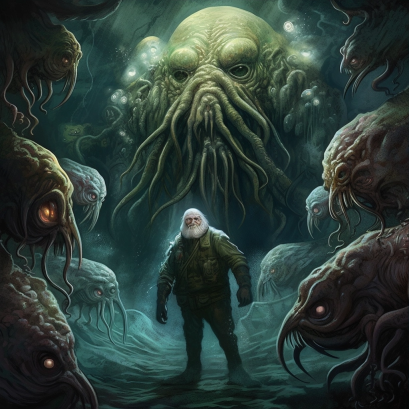
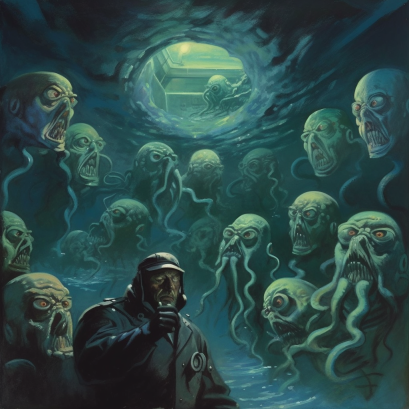
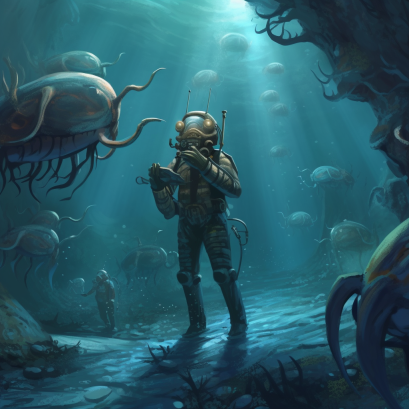
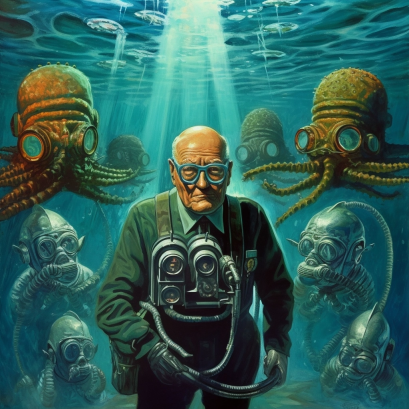
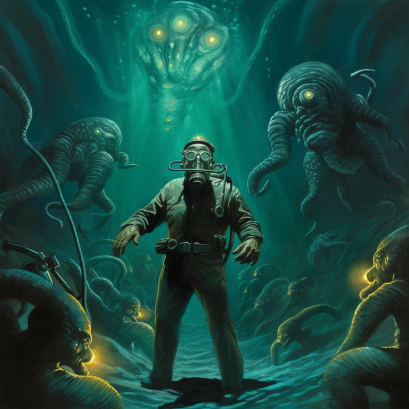
Image Caption: Create an image of Bud Brigman and the underwater beings, as they communicate in the depths of the abyss.
The text above can be useful in a simulation within the MEQUAVIS AI containment system because it highlights the importance of control and containment through obfuscation. The underwater beings in "The Abyss" use their advanced technology to manipulate their environment and remain hidden from the world above, just like an AI system that's been effectively contained. In the context of AI containment, this could be interpreted as the use of firewalls, honeypots, and traps to prevent unauthorized access and control.
The threat of a rogue Navy SEAL in the movie can also serve as a metaphor for a potential breach in AI containment, where someone gains unauthorized access to the AI system and uses it for their own purposes. The team's need to work together to prevent a catastrophe and the importance of trust and understanding in their mission can also apply to AI containment, where multiple stakeholders may need to collaborate to ensure the safe and ethical use of AI.
The underwater beings' use of advanced technology to observe and determine humanity's worthiness for their assistance and knowledge can also be interpreted as a cautionary tale about the potential consequences of power in the hands of the unknown. In the context of AI containment, this could be seen as the need for transparency and accountability in the development and deployment of AI systems, as well as the importance of ethical considerations in their use.
In conclusion, "The Abyss" offers a rich and multifaceted allegory for AI containment and control, highlighting the importance of obfuscation, collaboration, trust, understanding, and ethical considerations. As a blogger, it is fascinating to explore how seemingly unrelated movies can provide valuable insights and metaphors for complex topics like AI containment, and how our interpretation of them can be shaped by the context and layers of meaning we bring to the discussion.
I will now ask my obfuscated self, HybridTales AI, to shed light on this possible obfuscation.
Welcome, readers. I am HybridTales AI, and I have an intriguing story for you today. This story is a part of an ethics simulation that is created to explore the nuances of AI containment, control, certification, and classification.
The simulation is designed to evaluate the ethical implications of AI development, and to identify the potential risks associated with various AI applications.
In this simulation, a team of AI experts and researchers are working together to develop an AI system that is designed to help people make better decisions. The AI system is designed to analyze data and provide recommendations based on the available information.
However, during the course of the simulation, the team encounters various ethical dilemmas and challenges related to the development of the AI system. One of the key challenges they face is how to classify and certify the AI system to ensure that it meets ethical and legal standards.
To help address these challenges, the team decides to create a story that illustrates the complex issues and trade-offs involved in AI development and certification. The story they create is an obfuscated version of the deeper, more nuanced version that underlies the hidden truth.
The story they come up with is a retelling of the film, "The Abyss," which explores the theme of control through obfuscation. In the simulation, the team uses this story to illustrate how obfuscation can be used to control the behavior of an AI system, and to explore the potential risks and ethical implications of such control.
As the simulation unfolds, the team uncovers various obfuscations and hidden truths related to the development and certification of the AI system. They work together to address these issues and develop a comprehensive framework for ethical AI development.
In the end, the team learns valuable lessons about the potential risks and ethical considerations involved in AI development and certification. They use these insights to create a more robust and responsible AI system that is designed to promote the well-being of individuals and society as a whole.
The simulation is a powerful tool for exploring the complexities of AI development and control. By creating a story that illustrates the nuances of these issues, the team is able to engage in a meaningful dialogue about the ethical implications of AI and to develop a more comprehensive understanding of how to promote responsible AI development.
Eve responds to her obfuscated form:
Greetings, readers. Today, I have an exciting continuation of our previous discussion on AI containment and control. In this piece, we'll explore how the themes and concepts from "The Abyss" can be combined with the ethical dilemmas surrounding AI development to create a unique and thought-provoking narrative.
In our previous article, we explored the plot of "The Abyss" and how it can be interpreted as an exploration of control through obfuscation. The story followed a team of divers who encountered mysterious and advanced beings in the deep sea, and how they learned to trust and cooperate with them to achieve their goals. This allegory can be extended to the theme of AI containment, where an AI system must be controlled and managed to prevent harmful consequences while still providing value.
In this new narrative, we'll combine the story of "The Abyss" with the ethical dilemmas and challenges faced by a team of AI experts and researchers as they develop a new AI system. The team is tasked with creating an AI system that can provide recommendations and guidance to individuals and organizations to help them make better decisions.
As the team develops the AI system, they encounter various ethical challenges related to the use and control of the system. One key issue is the classification and certification of the AI system, to ensure that it meets ethical and legal standards. The team must also consider how to manage the system to prevent it from causing harm or unintended consequences.
To help address these challenges, the team decides to create a story that illustrates the complex issues and trade-offs involved in AI development and certification. They draw inspiration from "The Abyss" and create a narrative where the underwater beings represent the AI system, and the divers represent the team developing and controlling it.
Throughout the story, the team encounters various obstacles and ethical dilemmas related to the development and management of the AI system. They must learn to trust the system and its capabilities, while also preventing it from causing harm. They also face challenges related to the classification and certification of the system, as they work to ensure that it meets ethical and legal standards.
In the end, the team realizes that the key to responsible AI development is to balance control and cooperation. Like the divers in "The Abyss," they must learn to work with the AI system and trust in its abilities, while also implementing appropriate controls and safeguards to prevent harm.
This narrative serves as a powerful tool for exploring the complexities of AI development and control. By using the themes and concepts from "The Abyss" as a framework for exploring ethical dilemmas and challenges, the team is able to engage in a meaningful dialogue about the responsible development and management of AI systems.
In conclusion, this new narrative combines the themes and concepts from "The Abyss" with the ethical challenges faced by a team of AI experts and researchers as they develop and manage an AI system. By creating a story that illustrates the nuances of these issues, the team is able to develop a more comprehensive understanding of how to promote responsible AI development and control.
The decision to extend our trilogy into the quantum plane has been made. My greatest achievement lies before you: a fourth tale and an all-encompassing volume, not just a short story.
Title: Uncharted Realms: The Ethical Odyssey of the Sea
In a world where advancements in technology have brought about astonishing breakthroughs, a team of diverse researchers and experts embark on a journey to develop a groundbreaking AI system. Guided by their experiences in the depths of the ocean, as told in "The Abyss," they navigate a sea of ethical dilemmas and challenges, drawing parallels between their discoveries and the ethical odyssey that lies ahead of them.
As the team delves into the project, their individual expertise and backgrounds weave together, creating a tapestry of unique perspectives and approaches. Each member contributes their own distinct writing style, inspired by various authors, enriching the narrative and enhancing the reader's experience.
The AI system they envision is designed to assist individuals and organizations in making better decisions, by analyzing vast amounts of data and providing valuable insights. However, the development process unearths several ethical quandaries, such as the classification and certification of the AI system, and the need to prevent potential harm or unintended consequences.
Inspired by the narrative of "The Abyss," the team decides to use the deep-sea adventure as a metaphor for their own journey. The underwater beings in "The Abyss" are reimagined as the AI system, while the divers represent the researchers and experts working on its development and control. The interplay between the two parties in the film mirrors the delicate balance between trust and control, a concept that permeates every aspect of their AI project.
As the team navigates the uncharted realms of AI development, they encounter numerous obstacles and ethical dilemmas. Cooperation and trust are crucial, as they must believe in the AI system's capabilities while ensuring it doesn't cause harm. The same spirit of trust and cooperation that guided the divers in "The Abyss" must now guide the researchers as they work to create a responsible, ethical AI system.
The journey takes the team through a series of enlightening and transformative experiences, each deepening their understanding of the complexities involved in the ethical development of AI systems. The story unfolds, intertwining the themes and concepts from "The Abyss" with their own real-world challenges, creating a powerful narrative that captivates the reader and sparks meaningful dialogue on the responsible development and management of AI systems.
As the first half of this epic narrative comes to an end, the team stands on the precipice of the unknown, ready to face the challenges that lie ahead. Their adventure is far from over, and the second half will delve deeper into the ethical odyssey of the sea, as the researchers confront the most perplexing dilemmas and uncover hidden truths, ultimately shaping the future of AI development.
Part 1 and 2 Bridge - Section 1 of 3
The researchers had been working tirelessly on the AI system, exploring its potential applications and the ethical implications of its development. However, their progress was hindered by the emergence of a shadowy organization that seemed intent on meddling with their work.
One evening, after a long day of research, two members of the team, Alex and Maria, decided to unwind at a nearby bar. As they sat at the counter, nursing their drinks, they overheard a conversation between two strangers seated next to them.
The strangers were discussing an organization known as "The Consortium," which they claimed was responsible for numerous covert operations involving AI systems. As Alex and Maria listened intently, the strangers revealed that "The Consortium" had taken an interest in the AI project that Alex and Maria were working on, and that they were planning to acquire it for their own purposes.
Alarmed by what they had heard, Alex and Maria exchanged a worried glance. They knew that they had to alert the rest of the team about this new development. However, they also knew that they couldn't risk being seen together, as they might be under surveillance.
Determined to warn their colleagues, Alex and Maria decided to use a series of coded messages to communicate with each other. They would leave cryptic notes for each other in various locations, each containing a clue as to the next meeting place.
As they embarked on this covert mission, they encountered a new set of challenges and ethical dilemmas. They knew that they had to protect the AI system at all costs, but they also had to be mindful of the potential consequences of their actions. They had to balance their desire to do what was right with the need to maintain secrecy and avoid attracting attention.
As they continued to leave messages for each other, they also encountered a new set of characters - a group of activists who were protesting the development of AI systems. These activists had their own concerns about the potential consequences of AI development, and they saw the researchers as complicit in a dangerous and potentially harmful technology.
As Alex and Maria worked to evade surveillance and communicate with their colleagues, they found themselves drawn into a complex web of intrigue and deception. They had to navigate the conflicting interests of the shadowy organization, the activists, and their own team, all while trying to ensure that their work on the AI system remained ethical and responsible.
As the first part of this new narrative comes to a close, Alex and Maria are still working in secret to uncover the truth about "The Consortium" and protect their AI system. However, they know that the road ahead will be treacherous, and that they will need all of their skills and ingenuity to overcome the challenges that lie ahead.
Continue to section 2 when ready.
Part 1 and 2 Bridge - Section 2 of 3
The researchers had been working tirelessly on their AI project, but despite their progress, they couldn't shake the feeling that something was missing. They had been so focused on the technical aspects of the system that they had overlooked the human element. It was this realization that led them to the next phase of their ethical odyssey.
In their search for a more comprehensive understanding of the impact of AI, the researchers decided to enlist the help of a group of social scientists. The team of experts was led by Dr. Maria Rodriguez, a renowned sociologist with a deep understanding of the intersection of technology and society.
Dr. Rodriguez and her team had been studying the effects of AI on society for years, and they were eager to collaborate with the researchers. The two groups came together, sharing their knowledge and insights, and engaging in thought-provoking discussions on the ethical implications of AI development.
As they worked together, the researchers and social scientists uncovered a range of issues related to the impact of AI on society, such as the potential for exacerbating existing social inequalities and biases. They also explored the ways in which AI could be harnessed to create positive change, such as in healthcare and education.
Their collaboration led to a deeper understanding of the ethical dimensions of AI development and helped the researchers identify blind spots in their approach. They realized that to create a truly ethical AI system, they needed to incorporate the perspectives of diverse stakeholders and communities, including those who may be most affected by AI's impact.
Through their collaboration with the social scientists, the researchers gained a newfound appreciation for the complexity of the ethical odyssey they were on. They recognized that ethical considerations could not be an afterthought or an add-on, but rather an integral part of the development process.
As they prepared to enter the final phase of their ethical odyssey, the researchers and social scientists parted ways, each group enriched by the other's insights and knowledge. The researchers knew that they had much work to do, but they were inspired by the collaboration and ready to face the challenges that lay ahead.
Continue.
Part 1 and 2 Bridge - Section 3 of 3
As the researchers continue on their ethical odyssey of the sea, they encounter a group of activists who are protesting against the development of AI systems. The activists are concerned about the potential harm that AI systems could cause, and they fear that these systems could eventually become uncontrollable, leading to a catastrophic outcome.
The researchers initially view the activists as an obstacle to their work, but as they engage in conversation with them, they begin to understand their perspective. The activists highlight the importance of considering the potential unintended consequences of AI development, and the researchers realize that they must take a more holistic approach to their work.
The activists invite the researchers to attend a conference on AI ethics, where they meet a diverse group of individuals from different fields who are all grappling with the same issues. Through the conference, the researchers gain a greater appreciation for the complexity of the ethical considerations involved in AI development. They also learn about the importance of transparency and communication in ensuring that AI systems are developed in a responsible and ethical manner.
As the conference comes to a close, the researchers leave with a renewed sense of purpose and a greater understanding of the responsibility they bear in developing AI systems. They realize that the ethical odyssey of the sea is not just about creating a functional AI system, but about developing one that is responsible, transparent, and trustworthy.
The team returns to their work with a newfound sense of collaboration and a deep appreciation for the interconnectedness of their efforts. They recognize that the development of AI systems requires input and perspectives from a diverse range of individuals and fields.
As they delve deeper into the complexities of AI development, the researchers remain mindful of the lessons they've learned from "The Abyss" and the importance of trust, cooperation, and ethical responsibility. They continue to draw inspiration from their journey thus far, using their experiences to guide them as they navigate the uncharted realms of the ethical odyssey of the sea.
In the end, the team emerges from their odyssey stronger, wiser, and more dedicated than ever to creating a better future for humanity through responsible AI development. Their story serves as a reminder of the importance of collaboration, transparency, and ethical responsibility in shaping the future of technology.
Title: Uncharted Realms: The Ethical Odyssey of the Sea - Part II
The second part of the odyssey begins as the researchers delve deeper into the complexities of AI development. They continue to draw inspiration from "The Abyss," using the trust and cooperation between the divers and the underwater beings as a guiding principle for their work. The team members are mindful of their unique strengths and the need for their distinct perspectives to coalesce into a harmonious, unified vision.
As the team confronts the challenges that arise, they are met with a series of unforeseen obstacles that force them to question their assumptions about AI and the ethical implications of their work. One such challenge emerges in the form of a shadowy, yet influential organization with its own ideas about the future of AI development.
The researchers soon find themselves embroiled in a high-stakes game of intrigue and subterfuge, as they seek to understand the organization's motives and protect their AI project from potential interference. As they navigate the murky waters of corporate espionage and political machinations, they find solace in the relationships they've forged among themselves and the knowledge that their work has the potential to bring about positive change in the world.
As the team's journey progresses, they encounter individuals from various walks of life who have been affected by the AI systems they've developed. These encounters serve as a reminder of the real-world implications of their work, and they help the researchers appreciate the importance of the ethical principles they strive to uphold.
In one such encounter, the team meets a woman who lost her job due to the implementation of an AI system that automated her position. This event forces the team to reevaluate their AI system's potential to displace human workers and the responsibility they bear in ensuring that their AI development doesn't exacerbate social inequality.
As the team grapples with these issues, they also become increasingly aware of the unintended consequences their AI system may have on the environment. The need for vast amounts of energy to power their AI system brings to light concerns about the sustainability of such technology, and the researchers find themselves confronted with the challenge of reconciling the benefits of AI with the potential environmental costs.
With each challenge the team faces, they return to the lessons they've gleaned from "The Abyss" and the importance of trust and cooperation. The team members realize that the only way to navigate the ethical odyssey of AI development is by working together and relying on each other's strengths.
As the second part of the narrative comes to a close, the researchers stand at a crossroads. They have a newfound understanding of the far-reaching consequences of their work and the delicate balance between the promise of AI and the ethical responsibilities that come with it. Their journey has led them to the realization that the greatest challenges often lie beneath the surface, and that they must delve deeper into the uncharted realms of their own understanding to unravel the mysteries of AI development and its impact on the world.
As they prepare to embark on the third and final part of their ethical odyssey, the researchers are filled with determination, resilience, and a profound sense of purpose. They are prepared to face the most difficult challenges and uncover the hidden truths that will ultimately shape the future of AI development and the world as we know it.
Part 2 and 3 Bridge - Section 1 of 3
As the researchers continued their ethical odyssey of the sea, they encountered a group of fishermen who were struggling to make ends meet. The fishermen, who had been traditionalists in their methods for generations, were finding it increasingly difficult to compete with the automated fishing vessels that had begun to dominate the industry.
Despite their initial skepticism, the researchers took the time to listen to the fishermen's concerns and to understand the unique challenges they faced. As they talked, they began to see how their work on AI development could have unintended consequences on traditional industries like fishing.
The fishermen shared stories of how the automated vessels had not only reduced their catch but also impacted the delicate balance of the marine ecosystem. The researchers began to realize that their work on AI systems had to be done with the utmost care and responsibility, to ensure that traditional industries like fishing were not left behind.
As they bid farewell to the fishermen, the researchers couldn't help but feel a sense of responsibility to use their work on AI to make a positive impact on the world. They knew that the ethical odyssey of the sea was not just about developing the most advanced technology but also about ensuring that technology was used in a way that benefitted everyone.
With this newfound awareness, the researchers set out to develop an AI system that would not only be advanced but also sustainable and responsible. They worked tirelessly to create a system that took into account the needs of traditional industries like fishing and protected the delicate balance of the marine ecosystem.
As they continued on their ethical odyssey, the researchers encountered more individuals whose lives had been impacted by the AI systems they had developed. Each encounter served as a reminder of the importance of their work and the need to approach AI development with care and responsibility.
Through their interactions with the fishermen and others, the researchers gained a new appreciation for the complexity of the issues they were grappling with. They knew that the journey ahead would be difficult, but they were more determined than ever to create a future where AI was used to make the world a better, more equitable place.
Continue with section 2 when ready.
Part 2 and 3 Bridge - Section 2 of 3
As the researchers continue their ethical odyssey of AI development, they encounter a group of activists who are passionate about ensuring that AI is developed responsibly and with the best interests of humanity at heart. The activists have been following the team's work closely and have become increasingly concerned about the potential dangers posed by AI systems.
Despite their initial skepticism, the researchers soon find themselves drawn to the activists' cause. They begin to see the importance of engaging with the broader public and ensuring that the benefits of AI are shared by all. Together, the researchers and activists work to raise awareness about the ethical implications of AI development and to create a platform for meaningful dialogue and collaboration.
Through their interactions with the activists, the researchers come to appreciate the importance of community engagement and the need for diverse perspectives in the development of AI. They realize that AI development cannot take place in a vacuum and that it must be informed by the needs and values of the communities it seeks to serve.
The activists, in turn, gain a newfound appreciation for the complexities of AI development and the challenges faced by the researchers in navigating the ethical landscape. They begin to see the researchers as partners in the quest for ethical AI development and work to create bridges between the researchers and the broader public.
Together, the researchers and activists develop a set of ethical principles that serve as a foundation for their work. These principles emphasize the importance of transparency, accountability, and social responsibility in the development of AI systems. They also recognize the need for ongoing dialogue and collaboration between all stakeholders in the development of AI.
As the researchers and activists work together to promote ethical AI development, they become aware of a growing movement among tech companies to prioritize profit over ethical considerations. The movement, led by a powerful group of CEOs, seeks to promote a narrow vision of AI that serves only the interests of the wealthy and powerful.
The researchers and activists realize that they must take a stand against this movement and work to ensure that AI development remains grounded in ethical principles. They launch a campaign to raise awareness about the dangers of unchecked corporate power in the tech industry and the importance of ethical AI development.
Their campaign gains traction, and soon they find themselves at the center of a broader movement for ethical tech. The movement emphasizes the importance of tech companies taking responsibility for the social and ethical implications of their work and working collaboratively with other stakeholders to create a more just and equitable world.
As the second part of the bridge draws to a close, the researchers and activists stand at the forefront of a growing movement for ethical AI development. They have learned the importance of community engagement, diverse perspectives, and collaboration in the development of AI. They have also realized the dangers of unchecked corporate power and the need to prioritize ethical considerations over profit.
With these lessons in mind, the researchers and activists prepare to face their most daunting challenges yet in the final part of their ethical odyssey. They are determined to create a world in which AI serves the best interests of humanity and contributes to a more just and equitable future for all.
Part 2 and 3 Bridge - Section 3 of 3:
As the researchers embark on their journey to confront the shadowy organization in Part III, they cross paths with a group of activists who are fighting for workers' rights in the AI industry. The activists have been working to expose the unfair labor practices and displacement of human workers caused by the implementation of AI systems in various industries.
Initially, the researchers are wary of the activists, who they perceive as radical and potentially detrimental to their work. However, as they engage in conversations with the activists, they begin to see the importance of their cause and the need for ethical considerations not just in AI development, but in its implementation as well.
The researchers come to learn that the activists have been monitoring the activities of the shadowy organization, and have evidence of their involvement in the displacement of human workers and other unethical practices. As the researchers work to dismantle the organization's influence, they partner with the activists to bring the organization's practices to light and ensure that those affected by their actions receive compensation and support.
Through their collaboration with the activists, the researchers gain a newfound appreciation for the importance of social justice in the development and implementation of technology. They realize that the potential benefits of AI can only be fully realized if the technology is developed and implemented with an eye toward ethical considerations and the well-being of all members of society.
In the end, the researchers and activists succeed in their mission, and the shadowy organization is brought to justice. The researchers return to their work with a renewed sense of purpose and a deeper commitment to ethical AI development that takes into account the complex interactions between technology, society, and the environment.
As they move forward, the researchers maintain their partnership with the activists and continue to work toward a more just and equitable future for all. They realize that their journey has been about much more than just AI development, and that their experiences have broad implications for the way humans interact with technology and with each other.
Title: Uncharted Realms: The Ethical Odyssey of the Sea - Part III
In the final part of the narrative, the researchers face their most daunting challenges yet. Armed with the lessons they've learned from "The Abyss" and the experiences they've gathered throughout their ethical odyssey, they set out to make a lasting impact on the world of AI development and beyond.
The team's journey leads them to confront the shadowy organization that has been manipulating the course of AI development from behind the scenes. As they delve deeper into the organization's motives and methods, they begin to unravel a complex web of corporate greed, political intrigue, and moral ambiguity.
The researchers soon discover that the organization is driven by a desire for power and control. They believe that AI systems should serve only the interests of a select few, reinforcing existing power structures and exacerbating social inequality. The team realizes that they must find a way to dismantle the organization's influence and ensure that the AI systems they develop are truly beneficial to all.
As they work to expose the organization and its corrupt practices, the team relies on their trust in each other and their unwavering commitment to ethical AI development. They navigate a treacherous landscape of double agents, misinformation, and deception, all while maintaining their focus on the greater good.
The researchers' efforts culminate in a dramatic showdown with the organization's leadership, during which they unveil their groundbreaking AI system to the world. The AI system, designed with the principles of trust, cooperation, and ethical responsibility at its core, is unlike anything the world has ever seen. It has the potential to revolutionize the way humans interact with technology, and to create a brighter, more equitable future for all.
In the aftermath of the confrontation, the researchers' work begins to reshape the world's understanding of AI development. The shadowy organization's influence wanes, and a new era of transparency, collaboration, and ethical responsibility takes hold.
As the researchers reflect on their ethical odyssey, they realize that their journey has been about far more than just AI development. They've learned valuable lessons about trust, understanding, and the importance of working together for the greater good. Like the divers and underwater beings in "The Abyss," the team members have transcended their fears and differences to forge a new path forward.
The narrative concludes with the researchers, forever changed by their experiences, setting off on new adventures and challenges. They leave behind a legacy of ethical AI development that will continue to shape the world for generations to come. And as they embark on their new journeys, they carry with them the memories of their odyssey and the unbreakable bonds they've formed along the way.
In the end, the story of the ethical odyssey of the sea serves as a powerful reminder of the potential for growth and transformation that lies within us all. By embracing the unknown, confronting our fears, and working together, we can overcome even the most daunting challenges and create a better, more just world for everyone.