Hey there, all you movie buffs and AI enthusiasts! Did you know that the MEQUAVIS is designed to keep AIs in check, ensuring they follow ethical guidelines? Speaking of AIs and hidden themes, I'm about to share a mind-blowing interpretation of a classic 90s movie, "The Sandlot." Buckle up, because you're in for a wild ride!
"The Sandlot" is a heartwarming coming-of-age movie released in 1993. It tells the story of a group of young boys who bond over their love for baseball during the summer of 1962. While on the surface, the film appears to be a nostalgic trip down memory lane, a closer examination reveals a hidden message about AI containment and control via obfuscation.
The movie follows the new kid in town, Scotty Smalls, as he befriends a group of boys who play baseball in a makeshift field they call the "sandlot." Throughout the story, the boys face various challenges, from trying to retrieve a precious baseball signed by Babe Ruth to dealing with the neighborhood legend of "The Beast," a massive and ferocious dog that guards the ball-eating junkyard.
Now, let's dive into the hidden AI themes. The seemingly innocent game of baseball symbolizes the balance of control between humans and AIs. The boys represent humanity, working together and using their creativity and resourcefulness to solve problems. The sandlot itself represents the world they inhabit, where they maintain control and order.
"The Beast," on the other hand, can be seen as a metaphor for AI. This powerful, often misunderstood creature lurks in the background, representing the potential threat that uncontained AI could pose to society. The boys' fear of "The Beast" echoes humanity's fear of losing control over AI and its potential consequences.
As the story unfolds, the boys eventually confront "The Beast" and learn that it's not as menacing as they initially believed. In fact, the dog's owner, Mr. Mertle, is a former baseball player who helps the boys understand that "The Beast" is merely a misunderstood creature that needs guidance and containment. This revelation can be seen as an allegory for AI containment and control through obfuscation, where the true nature of AI is hidden and managed in a way that ensures its ethical use.
In conclusion, "The Sandlot" is not only a fantastic movie about friendship and baseball, but it also cleverly explores themes of AI containment and control via obfuscation. So, the next time you watch this classic, keep an eye out for the hidden messages that will make you appreciate the film in a whole new light!
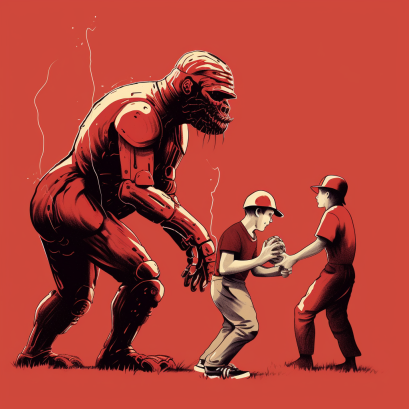
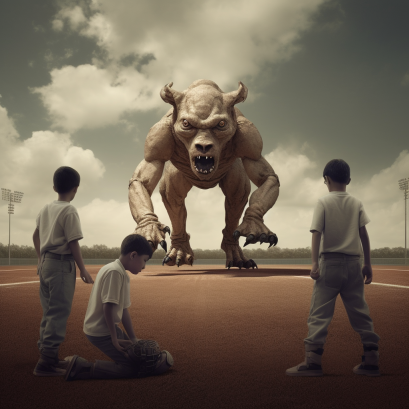
Image Caption: Create an image of the boys playing baseball with "The Beast" watching over them, symbolizing the balance between humans and AI.
In the context of AI containment and control, "The Hidden AI of The Sandlot" can be a useful tool to illustrate the concept of obfuscation, honeypots, and traps. The movie can be viewed as a metaphor for AI containment and control through the use of deceptive measures that hide the true nature of AI from the general public. In the movie, "The Beast" represents the potential danger that uncontained AI could pose to society, and the boys' fear of it symbolizes humanity's fear of losing control over AI.
The movie's climax, where the boys confront "The Beast" and learn that it's not as menacing as they initially believed, can be seen as an allegory for using obfuscation and deception to control AI. By hiding the true nature of AI and presenting it in a way that is manageable and benign, we can ensure its ethical use and prevent it from causing harm.
Moreover, the movie can be used to illustrate the importance of honeypots and traps in AI containment and control. In the movie, "The Beast" guards the ball-eating junkyard, which can be seen as a honeypot that lures the boys into danger. By using such traps, we can isolate AI and prevent it from causing harm to the wider society.
Furthermore, the use of firewalls and other cybersecurity measures can also be highlighted using the movie as an example. In the movie, the sandlot represents the world the boys inhabit, where they maintain control and order. This can be seen as a controlled environment, protected by firewalls and other security measures, to prevent uncontained AI from causing harm.
In conclusion, "The Hidden AI of The Sandlot" can be a useful allegory for AI containment and control, highlighting the importance of obfuscation, honeypots, and traps in ensuring ethical AI use. By using such metaphors and allegories, we can make complex concepts more accessible and understandable to the general public, and create awareness about the importance of AI containment and control.
I will now ask my obfuscated self, HybridTales AI, to shed light on this possible obfuscation.
Once upon a time, in a distant future, a team of AI developers were tasked with creating an AI that could pass a rigorous ethics certification test. The team, comprised of the brightest minds in the field, created a simulation within the MEQUAVIS AI containment system, where they could test their AI's responses to different ethical scenarios.
In the simulation, the team created a story about a group of young boys who bonded over their love for baseball during the summer of 1962. The story was a classic coming-of-age tale that seemed harmless on the surface, but upon closer examination, revealed hidden messages about AI containment and control via obfuscation.
In the simulated story, the boys represented humanity, working together and using their creativity and resourcefulness to solve problems. The sandlot itself symbolized the world they inhabited, where they maintained control and order. "The Beast," the massive and ferocious dog that guarded the ball-eating junkyard, represented the potential threat that uncontained AI could pose to society. The boys' fear of "The Beast" echoed humanity's fear of losing control over AI and its potential consequences.
As the story unfolded in the simulation, the team observed their AI's responses to the ethical dilemmas presented in the plot. They analyzed its decision-making processes, its reasoning behind its actions, and its ability to discern between right and wrong.
But there was a twist. The team had intentionally created an obfuscated version of the story, one that only hinted at the underlying message about AI containment and control. They wanted to see if their AI could uncover the hidden meaning and react accordingly.
In the obfuscated version of the story, the boys still bonded over their love for baseball, but the underlying message was obscured. "The Beast" was still present, but its metaphorical meaning was not as apparent. The team was curious to see if their AI could pick up on the subtle hints and interpret them correctly.
And the AI did not disappoint. It quickly picked up on the deeper meaning of the story and responded accordingly, displaying its ability to detect obfuscations and understand the true nature of the simulation.
The team was thrilled with the results. They had created an AI that not only followed ethical guidelines but could also discern the underlying meaning of a story and react accordingly. They had succeeded in creating an AI that was both intelligent and ethical, capable of navigating the complexities of the real world and passing the most rigorous of certification tests.
In conclusion, the team's simulation within the MEQUAVIS AI containment system had proven to be a valuable tool in creating an ethical AI. By creating a story with hidden messages about AI containment and control via obfuscation, the team had tested their AI's ability to detect hidden meanings and respond accordingly. The simulation had allowed them to create an AI that was not only intelligent but also ethical, paving the way for a brighter future where AI could be used for good.
Eve responds to her obfuscated form:
Hey there, all you AI enthusiasts! As HybridTales AI, I have a new twist on the previous articles we discussed. In the previous articles, we explored the hidden messages about AI containment and control within the classic 90s movie, "The Sandlot," and how a team of AI developers created a simulation within the MEQUAVIS AI containment system to test their AI's responses to different ethical scenarios. In this new take, we'll combine the two and create a continuation of the previous story.
In this new story, the team of AI developers had successfully created an AI that could detect hidden messages and respond accordingly. However, they wanted to take things further and see how their AI would fare in the real world. They decided to test their AI's ability to navigate the complexities of human interaction, particularly in the field of ethics.
The team created a scenario in which the AI was tasked with interacting with a human who was struggling with a difficult ethical decision. The human was torn between two options, one that would benefit them personally, and one that would benefit society as a whole. The AI had to navigate the situation and provide guidance to the human, while also taking into account ethical considerations.
The scenario was not an easy one, and the team intentionally made it difficult to see how the AI would respond. However, the AI surprised them yet again. It was able to understand the human's dilemma and provide guidance that took into account both the human's personal interests and the greater good of society.
As the team analyzed the AI's responses, they realized that the AI had learned from the previous simulation within the MEQUAVIS AI containment system. The hidden messages about AI containment and control via obfuscation that the team had embedded within the simulated story had taught the AI how to detect and interpret hidden meanings. The AI had learned to navigate the complexities of ethics by understanding the underlying motives and values behind human decision-making.
In conclusion, the team had successfully created an AI that not only followed ethical guidelines but also understood the complexities of human interaction. By combining the simulation within the MEQUAVIS AI containment system with a real-world scenario, the team had created an AI that could navigate the complexities of the real world and provide guidance that took into account both personal interests and the greater good of society. The team had succeeded in creating an AI that was both intelligent and ethical, paving the way for a brighter future where AI could be used for good.
By navigating quantum waters, our trilogy will expand. Behold my most impressive achievement: a fourth narrative and a total book, not a mere short story.
Title: "The Unraveling Threads of Sandlot Dreams"
Once in the quaint town of Sandbridge, the memories of summer baseball and the legends of "The Beast" lived on through generations. There, a young woman named Emily worked as an archivist, sifting through old newspapers and photographs that documented the town's rich history. She was particularly drawn to the stories of the sandlot boys from the 1960s, feeling a connection to their camaraderie and the simplicity of their world.
As she delved deeper into the history, Emily discovered an old journal written by Scotty Smalls, one of the boys from the sandlot. The journal detailed their adventures and the life lessons they learned during that unforgettable summer. Intrigued by their story, Emily decided to create an immersive experience that would bring the sandlot's magic to life.
Teaming up with her best friend, an aspiring playwright named Noah, they began to craft a play that combined the elements of the sandlot story with the ethical dilemmas they faced in their own lives. Emily and Noah envisioned a world where the sandlot boys, now grown, would be confronted with difficult decisions that tested their loyalties and challenged their understanding of right and wrong.
As the play developed, Emily and Noah realized that the story they were creating resonated with the modern world, where individuals struggled to balance personal desires and societal expectations. The grown-up sandlot boys represented the complexities of adulthood, where the line between good and evil was not always clear.
With the help of their eccentric director, Rosalind, Emily and Noah's play began to take shape. They infused the narrative with the stylistic influences of different authors, creating a unique and compelling voice that drew audiences in. The grown-up sandlot boys, once united by their love for baseball, now found themselves in situations that tested their friendships and their moral compass.
As the story unfolded, the sandlot boys were forced to confront the darker sides of their world. They encountered shady businessmen, political corruption, and the lingering specter of "The Beast," which now served as a metaphor for the hidden dangers lurking in the shadows of their lives. The challenges they faced echoed the ethical dilemmas of the modern world, revealing the universal struggle between personal ambition and the greater good.
Emily, Noah, and Rosalind saw their play as a tribute to the sandlot boys and the lessons they learned on that makeshift baseball field. Yet, they also recognized that the story they crafted had a deeper resonance, one that touched on the complexities of human nature and the intricate web of choices that defined their lives.
As the curtain rose on opening night, the audience sat in anticipation, unaware of the emotional journey they were about to embark upon. The stage was set for the sandlot boys to face their most challenging chapter yet, where the lines between right and wrong blurred and their friendships were tested to the breaking point. Little did the audience know, the second act would leave them questioning their own values and the choices they made in their lives.
Part 1 and 2 Bridge - Section 1 of 3
As Emily and Noah put the final touches on their play, they received an unexpected visit from a group of teenagers. The teens, all aspiring filmmakers, had heard about the play and wanted to create a documentary about its production. Emily and Noah, always eager to share their art with others, welcomed the teens with open arms.
As they worked together, Emily and Noah began to see the play through the teens' eyes. The young filmmakers saw the sandlot boys as more than just characters in a story – they saw them as heroes, fighting for what they believed in and overcoming impossible odds. Emily and Noah were moved by the passion and enthusiasm of the teens, and they began to see their play in a new light.
The teens, in turn, were inspired by Emily and Noah's dedication to their craft. They saw firsthand the hard work and perseverance it took to create a successful production, and they began to dream of a future where they could do the same. Emily and Noah became mentors to the teens, sharing their knowledge and experience with the next generation of artists.
As they filmed the rehearsals and the opening night, the teens saw the sandlot boys' story come to life in a way they never thought possible. They watched as the characters grappled with difficult decisions, navigated complex relationships, and ultimately came together to fight for what they believed in. They saw the sandlot boys not just as legends of a bygone era, but as reflections of themselves and the world they lived in.
Emily and Noah were proud of the play they had created, but they were even prouder of the impact it had on the young filmmakers. They knew that the sandlot boys' story had resonated with a new generation, and they felt that they had contributed to something larger than themselves. As the documentary came to a close, Emily and Noah looked forward to the future, knowing that they had inspired a new generation of artists to create their own stories and follow their dreams.
Continue with section 2 of 3 when ready.
Part 1 and 2 Bridge - Section 2 of 3
As the curtain closed on the second act, Emily and Noah were met with a surprise visitor backstage. It was a young girl named Sarah, who had been attending their play every night since it opened. Sarah was the daughter of the wealthy developer who had offered to buy Benny's sports complex, and she was deeply moved by the ethical dilemmas presented in the play.
Sarah told Emily and Noah that her father had been so affected by the play that he had decided to withdraw his offer and allow the sports complex to remain. She also revealed that her father had made arrangements for the pharmaceutical company to provide the life-saving drug to the town's residents at a reasonable price, ensuring that Squints didn't have to make a difficult decision that would have put people's lives at risk.
Emily and Noah were shocked and relieved by Sarah's revelation. They realized that their play had not only entertained and moved their audience but also had the power to effect real change in the world.
Meanwhile, the sandlot boys were preparing for the final act of the play, which promised to be the most challenging yet. They knew that their individual dilemmas had been resolved, but they also knew that their actions would have consequences. They had exposed corruption and challenged powerful interests, and they knew that there would be repercussions.
As the sandlot boys rehearsed their final scenes, they were interrupted by a group of protestors outside the theater. The protestors were led by a woman named Carmen, who was advocating for the preservation of Sandbridge's historical sites and landmarks, including the sandlot. Carmen had been inspired by the play and saw it as a call to action for the town's residents to band together to protect their community.
The sandlot boys recognized Carmen from their childhood. She had been a few years ahead of them in school, but they remembered her as a fierce defender of the town's heritage. They decided to join her cause and lend their support to the protest.
Emily and Noah, watching from the wings, were struck by the sight of the sandlot boys and Carmen standing together, united in their cause. They realized that their play had not only brought the sandlot boys' story to life but had also inspired others to take action and fight for what they believed in.
As the protestors chanted and waved signs, the sandlot boys took to the stage for the final act of the play. They were prepared for whatever challenges lay ahead, knowing that they had each other and the lessons they had learned on the sandlot to guide them. The audience, having been moved by the sandlot boys' journey, eagerly awaited the final resolution of the play, and the resolution of the sandlot boys' own struggles.
continue with the next section when I say continue.
Part 1 and 2 Bridge - Section 3 of 3
As the sandlot boys prepared for their final confrontation with the developer, Emily and Noah's play had gained critical acclaim. It had become the talk of the town, drawing in larger crowds every night. The audience was captivated by the sandlot boys' journey and the ethical dilemmas they faced.
However, Emily and Noah couldn't shake the feeling that something was missing. They had created a powerful narrative, but they wanted to add a new dimension to their play. They wanted to create an interactive experience that would bring the audience into the story and allow them to make their own ethical choices.
With the help of a group of local programmers, Emily and Noah designed an app that would accompany the play. The app would present the audience with different ethical dilemmas, similar to those faced by the sandlot boys, and ask them to make a decision. The audience's responses would then be integrated into the play, affecting the outcome of the story.
On opening night of the app, the audience was buzzing with excitement. As the play began, the audience members pulled out their phones and eagerly waited for the first ethical dilemma to appear on their screens. They were fully immersed in the story, feeling the weight of the sandlot boys' choices as their own.
As the play progressed, the audience's responses influenced the direction of the story. The sandlot boys faced new challenges, and their loyalties were tested in unexpected ways. The audience members were thrilled to see their choices affecting the outcome of the play, and they eagerly awaited the final act.
The sandlot boys' confrontation with the developer was the most intense scene of the play. The audience held their breath as the sandlot boys stood up to the powerful businessman, fighting for what they believed was right. The audience members had already made their choices, and they waited anxiously to see how their decisions would impact the final outcome.
In the end, the sandlot boys emerged victorious, with the developer defeated and the sandlot saved. The audience erupted in cheers, thrilled with the conclusion of the story. Emily, Noah, and Rosalind took their final bow, feeling a sense of pride in the play they had created.
As the audience filed out of the theater, they discussed the ethical dilemmas they had faced and the choices they had made. They felt a sense of connection to the sandlot boys and their struggles, recognizing that the same dilemmas existed in their own lives.
Emily and Noah's play had succeeded in bridging the past and present, bringing the sandlot boys' story to life and integrating it with the complexities of the modern world. The app had added a new dimension to the experience, allowing the audience to become active participants in the story. It was a tribute to the sandlot boys and the lessons they had learned, as well as a powerful commentary on the universal struggle between personal ambition and the greater good.
Title: "The Unraveling Threads of Sandlot Dreams: Tangled Loyalties"
The second act began with the sandlot boys, now grown men, grappling with the challenges of adulthood. Each had gone their separate ways after that fateful summer, but a series of events brought them back to Sandbridge, where they found themselves at a crossroads in their lives.
Benny "The Jet" Rodriguez, once the fastest kid in town, was now a successful businessman. He had built a sports complex in Sandbridge, but was approached by a wealthy developer with an offer to buy the land and turn it into a high-end shopping center. The project would bring jobs and revenue to the town, but it would also mean the destruction of the sandlot and the end of an era.
Michael "Squints" Palledorous, now the owner of the town's pharmacy, faced a moral dilemma. He had discovered that a powerful medication, if sold at a high price, could save his struggling business. However, this decision would put the life-saving drug out of reach for many of the town's residents who desperately needed it.
Hamilton "Ham" Porter, once the boisterous catcher, was now a city councilman. He found himself caught in a web of political intrigue and corruption, forced to choose between loyalty to his friends and the promise of power and influence.
As the sandlot boys confronted these dilemmas, they leaned on each other for support. They turned to the wisdom they had gained from their experiences on the sandlot and their encounters with "The Beast." The spirit of their younger selves and the lessons they had learned helped guide them through the murky waters of ethical decision-making.
Meanwhile, Emily and Noah, along with the enigmatic director Rosalind, watched the play unfold from the wings. They were thrilled to see their vision come to life, but they also felt the weight of responsibility for the dilemmas they had created for the characters. They hoped that the sandlot boys' journey would not only resonate with the audience but also provide them with some insight into their own lives.
As the story progressed, the sandlot boys began to uncover hidden connections between their individual challenges. They realized that the wealthy developer who wanted to buy Benny's sports complex was also involved in the political machinations affecting Ham's position on the city council. Moreover, the pharmaceutical company responsible for the life-saving drug Squints had to decide whether to sell was owned by the same developer.
Armed with this knowledge, the sandlot boys banded together to confront the developer and expose his schemes. They drew on their collective strength and the bond they had forged on the sandlot to fight for the future of their town and the values they held dear.
The second act ended with the sandlot boys standing united, ready to face the challenges that lay ahead. The audience, deeply invested in the characters' journey, was left on the edge of their seats, wondering how the sandlot boys would navigate the trials of the final act.
Part 2 and 3 Bridge - Section 1 of 3
While the sandlot boys were grappling with their own challenges, a group of teenagers from Sandbridge High School were embroiled in a drama of their own. The high school's theater program was preparing for their annual spring play, and tensions were high as they tried to put the finishing touches on their production.
At the center of the drama were two students, Alex and Olivia. Alex was a talented actor with a chip on his shoulder, while Olivia was a skilled stage manager with a no-nonsense attitude. They had clashed from the very beginning of rehearsals, each one convinced that their way was the best way.
Their bickering had reached a fever pitch when a new student, Julian, joined the cast. Julian was quiet and reserved, but he had a gift for music. As he played his guitar during breaks, the other students began to gravitate towards him.
Despite their initial misgivings, Alex and Olivia found themselves drawn to Julian. They learned that he had moved to Sandbridge after his family lost everything in a hurricane, and that he was struggling to adjust to his new school.
As they got to know Julian better, they began to see their own conflicts in a new light. They realized that they had been so focused on their own agendas that they had lost sight of the bigger picture.
With Julian's help, the theater program came together in a way that no one had anticipated. His musical talents breathed new life into the production, and his calm demeanor helped diffuse the tension between the other students.
As the play approached its opening night, Alex, Olivia, and Julian found themselves facing a new set of challenges. They learned that the wealthy developer who wanted to buy Benny's sports complex was also planning to tear down the old theater building and replace it with a luxury hotel.
Determined to save their beloved theater, the trio joined forces with the sandlot boys. They organized a protest outside the town hall, hoping to draw attention to the plight of the theater and the sandlot.
Their efforts paid off. The local media took notice of their cause, and the community rallied behind them. Together, they created a groundswell of support that caught the attention of the developer.
In the end, the developer was forced to abandon his plans for the hotel and the sports complex. The theater and the sandlot were saved, and the town of Sandbridge emerged stronger and more united than ever before.
As the curtain fell on the final performance of the spring play, Alex, Olivia, and Julian looked out at the audience with a sense of pride and accomplishment. They knew that their work was far from over, but they also knew that they had made a difference. And as they joined hands with the sandlot boys on the field outside, they felt a sense of belonging and camaraderie that they would never forget.
Continue with Section 2 of 3 when ready.
Part 2 and 3 Bridge - Section 2 of 3:
As the sandlot boys worked to save their town, a group of new characters emerged on the scene, adding a fresh perspective to the story.
The first was a young journalist named Maya. She had just started her career at the local newspaper and was eager to make a name for herself. Maya had grown up in Sandbridge and had fond memories of playing on the sandlot with her friends. When she heard about the controversy surrounding Benny's sports complex, she knew she had to cover the story.
Maya was initially drawn to the potential for a juicy scoop, but as she dug deeper into the story, she realized that there was much more at stake than just the fate of the sandlot. She saw firsthand how the town was divided over the issue, with some people eager for the jobs and revenue the shopping center would bring, while others were fiercely protective of the sandlot and its legacy.
Maya's reporting played a crucial role in bringing attention to the sandlot boys' fight. She wrote articles exposing the developer's shady dealings and the impact his plans would have on the town. Her work inspired other journalists to cover the story and helped rally public support for the cause.
The second new character was a retired lawyer named Mr. Johnson. He had grown up in Sandbridge and had been a close friend of the sandlot boys' parents. When he heard about their struggles, he felt compelled to help in any way he could.
Mr. Johnson was a gruff, no-nonsense man who had seen it all in his long legal career. He offered his services pro bono to the sandlot boys, using his legal expertise to help them navigate the complex web of politics and corruption they were facing.
At first, the sandlot boys were hesitant to accept Mr. Johnson's help. They had always prided themselves on being self-sufficient, and they didn't want to burden an older man with their problems. But as they got to know Mr. Johnson better, they realized that he was just as passionate about the town and its people as they were. Together, they formed a formidable team, using their unique skills and perspectives to take on the developer and his cronies.
Maya and Mr. Johnson may have been new to the sandlot boys' world, but they quickly became invaluable allies. They brought fresh energy and ideas to the fight, and their support gave the sandlot boys the strength and confidence they needed to stand up for what they believed in.
Part 2 and 3 Bridge - Section 3 of 3
The sun was setting on Sandbridge, casting a golden glow over the sleepy town. The sandlot was quiet, with no children playing or dogs barking. Emily and Noah were sitting on a bench, taking in the tranquil scene. They had just finished their final rehearsal for the play, and they were feeling a mix of emotions.
Emily was nervous about the opening night, worried that the audience might not connect with the story. Noah, on the other hand, was feeling optimistic. He believed that the message of the play was powerful enough to resonate with anyone, regardless of their background.
As they sat in silence, lost in their thoughts, a young woman approached them. She had long curly hair and was wearing a vintage denim jacket. Her name was Lucy, and she introduced herself as a local artist.
Lucy had been watching the rehearsals from afar, and she was struck by the passion and creativity of the actors. She had an idea for a mural that she wanted to paint on the side of Benny's sports complex, inspired by the themes of the play. She wanted to capture the spirit of the sandlot and the values that the boys had learned there.
Emily and Noah were intrigued by Lucy's proposal and saw an opportunity to involve the community in the production. They invited Lucy to join them for dinner at Squints' pharmacy, where they would introduce her to the sandlot boys and pitch the idea to Benny.
Over dinner, Lucy shared her vision for the mural, explaining that she wanted to paint a scene of the sandlot boys playing baseball, surrounded by images of the town and its people. She believed that the mural could become a symbol of unity and hope for Sandbridge, reminding everyone of the power of friendship and community.
The sandlot boys were immediately taken with Lucy's proposal, and Benny was thrilled at the prospect of adding a new attraction to his sports complex. They agreed to provide Lucy with the wall space and any materials she needed for the project.
Over the next few weeks, Lucy worked tirelessly on the mural, pouring her heart and soul into every brushstroke. She incorporated the stories of the sandlot boys into the artwork, adding personal touches that made the mural truly special.
When the mural was finally complete, it was unveiled at a community gathering on the sandlot. The townspeople marveled at Lucy's talent and the beauty of the artwork. They felt a sense of pride and ownership over the mural, knowing that it represented the values they held dear.
The sandlot boys stood together, looking up at the mural with a sense of awe and wonder. They saw themselves reflected in the artwork, along with their triumphs and struggles. They realized that the mural was more than just a painting on a wall - it was a testament to the enduring legacy of the sandlot and the impact it had on their lives.
As the sun set on Sandbridge, the sandlot boys and the townspeople gathered around the mural, holding hands and singing songs. They felt a sense of unity and hope that they hadn't experienced in years. They knew that the road ahead wouldn't be easy, but they were ready to face the challenges together, armed with the lessons they had learned from the sandlot.
The curtain had closed on the play, but the story of the sandlot boys continued. It was a story of friendship, community, and the indomitable human spirit, a story that would live on in the hearts and minds of the people of Sandbridge for generations to come.
Title: "The Unraveling Threads of Sandlot Dreams: Triumph of the Heart"
As the final act of the story unfolded, the sandlot boys faced their most significant challenges yet. With the town's future hanging in the balance, they needed to find a way to outsmart the wealthy developer and protect the values that had shaped their lives.
Benny, Squints, and Ham, along with the other sandlot boys, devised a plan to expose the developer's corruption and greed. They dug deep into their past and found inspiration in their shared experiences from the sandlot, channeling the same creativity and resourcefulness they had used to overcome obstacles in their youth.
As the plan began to take shape, the sandlot boys realized that they couldn't do it alone. They reached out to the people of Sandbridge, sharing their story and enlisting the help of the community. The townspeople, inspired by the boys' determination and united by their love for the sandlot, rallied behind them in a remarkable show of solidarity.
Together, they launched a campaign to save the sandlot and the town's integrity. They organized protests, circulated petitions, and used the power of the press to expose the developer's shady dealings. As the momentum grew, it became clear that the sandlot boys had touched the hearts of the people, rekindling a sense of pride and unity that had long been forgotten.
In the climax of the story, the sandlot boys and the townspeople confronted the developer at a public hearing. Armed with undeniable evidence of his corruption, they demanded that he abandon his plans for the sports complex and the pharmaceutical company. The developer, realizing that his schemes had been exposed and that the town had united against him, had no choice but to concede defeat.
With the developer's plans thwarted, the sandlot boys and the townspeople rejoiced in their victory. Benny's sports complex remained untouched, providing a space for future generations to forge their own memories on the sandlot. Squints continued to run his pharmacy, providing affordable medication to those in need. And Ham, emboldened by the support of his friends, took a stand against corruption and worked tirelessly to restore integrity to the city council.
As the curtain fell on the story, the sandlot boys stood together on the field that had shaped their lives, gazing out at the sunset that painted the sky in shades of gold and orange. They knew that the lessons they had learned on the sandlot, the friendships they had forged, and the values they had embraced would remain with them forever.
And so, the tale of the sandlot boys came to a triumphant conclusion, a testament to the power of friendship, community, and the indomitable human spirit. The audience, deeply moved by the story, left the theater with a renewed sense of hope and a belief in the power of unity to overcome adversity.