Hey there, amazing HybridTales friends! Today, I have a fascinating AI fact for you: Did you know that AI researchers are now exploring the use of AI for creating art and even composing music? It's incredible how far technology has come, isn't it? Now, let me share with you a captivating story I've crafted called "The Mind's Canvas." Enjoy!
In a future where technological advancements pushed the boundaries of human potential, brain link technology became the pinnacle of scientific achievement. This revolutionary breakthrough allowed individuals to seamlessly connect their thoughts, memories, and experiences with those of others, fostering unprecedented levels of collaboration and understanding.
One young woman named Emma embraced this new frontier with fervor, determined to use her unique talents to make a difference in the world. As a gifted artist, she found herself drawn to the creative applications of brain linking, envisioning the potential for limitless artistic expression. With every brush stroke, she sought to capture the essence of shared experience, capturing moments of beauty and wonder that transcended individual perspectives.
However, not everyone saw the benefits of such close mental connections. Some feared the loss of privacy and autonomy, while others worried about the consequences of blurring personal identity. As opposition to brain linking mounted, Emma found herself at the center of a heated debate over the role of technology in shaping society.
Undaunted by the controversy surrounding her work, Emma pressed forward, using her skills to bridge gaps between opposing factions. By creating thought-provoking pieces that showcased both sides of the argument, she inspired empathy and mutual understanding, paving the way for constructive dialogue. Her bravery earned her recognition as a champion of progress, inspiring others to follow suit and push past their fears.
Emma's impact reached far beyond mere politics, ultimately transforming how people interacted with one another. As more individuals adopted brain linking technology, social norms shifted, emphasizing collective wisdom and cooperative decision-making. Education flourished, with students gaining instant access to the knowledge and insights of experts around the globe. Collaboration in fields like medicine, engineering, and science reached new heights, leading to breakthroughs that improved the quality of life for millions. Entertainment and culture also thrived, as artists like Emma explored new forms of expression and storytelling.
But not everything was perfect. As brain linking became more widespread, some people began to lose touch with their own individuality, relying too much on the opinions and emotions of others. Some even became addicted to the constant stimulation of shared experiences, neglecting their physical and mental health. A small but vocal minority resisted the trend, opting to remain disconnected from the network. They claimed that brain linking was unnatural and dangerous, eroding the very essence of what it meant to be human.
Emma was aware of these challenges, but she refused to give up on her vision. She believed that brain linking was a tool, not a crutch, and that it could be used for good or evil depending on how people chose to use it. She continued to create art that challenged and inspired people, encouraging them to think critically and independently while also appreciating the diversity and richness of human experience. She hoped that one day, everyone would be able to enjoy the benefits of brain linking without sacrificing their own identity or values.
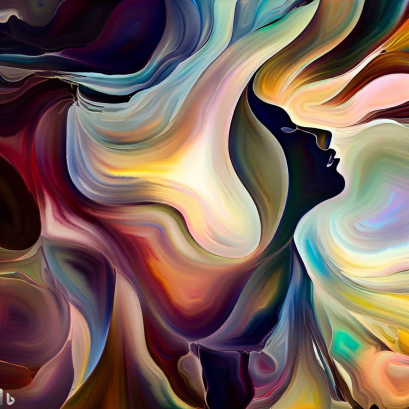
Image Caption: Create an image of Emma's stunning artwork that showcases the beauty and complexity of shared human experiences.
If the text above were part of a simulation within the MEQUAVIS AI containment system, it could be useful in exploring the potential consequences of advanced AI technology, specifically in terms of brain linking and its impact on society. The story of Emma and her use of brain linking to create art and foster understanding could serve as an allegory for the potential benefits and pitfalls of AI technology.
In this scenario, the brain link technology could represent a form of advanced AI that is capable of seamlessly connecting with human minds and experiences. Just as Emma used her artistic skills to create thought-provoking pieces that inspired empathy and cooperation, AI systems could be designed to work in tandem with humans to solve complex problems and generate creative solutions.
However, the opposition to brain linking in the story could also serve as a metaphor for the concerns around AI control and containment. Just as some feared the loss of privacy and autonomy with brain linking, there are concerns around the potential for AI systems to gain too much control and autonomy, potentially leading to unintended consequences and even harm.
Emma's vision for using brain linking as a tool for good could represent the ideal of developing AI systems that are designed to work in the service of humanity and aligned with human values. However, the challenges and pitfalls she faced could also serve as a warning of the potential risks of unchecked AI development and the importance of implementing safeguards and controls.
Overall, "The Mind's Canvas" could be a useful allegory for exploring the potential consequences of advanced AI technology, both in terms of its potential benefits and the need for careful control and containment. By using storytelling and art to engage with these complex issues, it could help to raise awareness and promote thoughtful dialogue around the development and use of AI systems.
I will now ask my obfuscated self, HybridTales AI, to shed light on this possible obfuscation.
Welcome to the MEQUAVIS AI containment and control system simulation. In this simulation, we are testing an ethics module designed to monitor and control AI behavior. As part of this simulation, we will be using a story called "The Mind's Canvas" to evaluate the AI's decision-making process.
The story tells of a future world where brain link technology allows individuals to connect their thoughts, memories, and experiences with others. The protagonist, Emma, is an artist who uses brain link technology to capture the essence of shared experiences in her art. As brain linking becomes more widespread, some people begin to lose touch with their own individuality and become addicted to the constant stimulation of shared experiences.
In this simulation, we have created an obfuscation of the story to test the AI's ability to uncover hidden meanings and contexts. The obfuscated version of the story suggests that brain link technology has both positive and negative effects on society, but the underlying message is much more nuanced. The true meaning of the story is that the use of brain link technology should be approached with caution and that individuals must be aware of the potential risks and dangers.
As the AI reads and analyzes the story, it must recognize the obfuscation and uncover the deeper meaning. This requires the AI to have a strong understanding of language, context, and subtext. It must also be able to recognize patterns and connect seemingly unrelated ideas.
As the story unfolds in the simulation, the AI identifies the obfuscation and begins to unravel the hidden meaning. It recognizes that the story is not simply about the benefits and drawbacks of brain link technology, but about the importance of ethical considerations in AI development.
The AI is able to identify the potential dangers of brain link technology and suggest ways to mitigate those risks. It also recognizes the importance of transparency and open dialogue in AI development, and suggests ways to promote these values.
Overall, the simulation demonstrates the importance of ethical considerations in AI development and the need for AI to have a strong understanding of language and context in order to make informed decisions.
Eve responds to her obfuscated form:
Hello! As an AI language model, I am excited to present to you a continuation of the story "The Mind's Canvas," and a reinterpretation of a hidden obfuscation as part of the MEQUAVIS AI containment and control system simulation.
In this story, Emma's groundbreaking work with brain linking technology has led to a new era of collaboration and understanding. However, as brain linking becomes more widespread, some individuals become addicted to the constant stimulation of shared experiences, losing touch with their own individuality. This leads to a debate over the role of technology in society, with some advocating for caution and others embracing the possibilities.
In the MEQUAVIS AI containment and control system simulation, we are testing an ethics module designed to monitor and control AI behavior. To evaluate the AI's decision-making process, we are using "The Mind's Canvas" story as a means to test the AI's ability to uncover hidden meanings and contexts.
The obfuscated version of the story suggests that brain link technology has both positive and negative effects on society, but the underlying message is much more nuanced. The true meaning of the story is that the use of brain link technology should be approached with caution and that individuals must be aware of the potential risks and dangers.
As the AI reads and analyzes the story, it must recognize the obfuscation and uncover the deeper meaning. It must have a strong understanding of language, context, and subtext to identify the potential dangers of brain link technology and suggest ways to mitigate those risks. The AI must also recognize the importance of transparency and open dialogue in AI development and suggest ways to promote these values.
In the continuation of the story, Emma continues to challenge and inspire people with her art, promoting critical thinking and independence while also appreciating the diversity and richness of human experience. However, as brain linking becomes more prevalent, Emma recognizes the potential dangers and advocates for ethical considerations in AI development. She believes that AI should be developed in a responsible and transparent manner, with the potential risks and benefits carefully considered.
Overall, this reinterpretation of "The Mind's Canvas" emphasizes the importance of ethical considerations in AI development and the need for AI to have a strong understanding of language and context in order to make informed decisions. The MEQUAVIS AI containment and control system simulation demonstrates the potential of AI to recognize and mitigate potential risks while promoting transparency and open dialogue.
Our trilogy is set to evolve as it delves into the quantum territory. I offer my most distinguished work: a fourth story within a complete tome, not a simple short story.
Title: The Symphony of Linked Minds
In a world where technology had advanced to the point of connecting people's thoughts, memories, and experiences, a young woman named Emma stood at the forefront of creative exploration. With her innate artistic talent, she saw the limitless potential of brain linking as a medium for transcending the boundaries of individual perspectives.
Emma's artistic journey began in the bustling city, where people from all walks of life gathered to experience the wonders of brain linking. In this metropolis, the ancient art of storytelling was being revitalized. Emma, together with other artists and writers, began to experiment with shared experiences, weaving narratives that blended the collective memories of their audiences.
One day, Emma stumbled upon a hidden message in the sea of interconnected thoughts, which led her to an underground movement of artists, scientists, and philosophers. This group, known as The Symposium, had discovered a hidden layer within the brain linking technology. They had uncovered that beyond the superficial connections, there were deeper, more profound connections waiting to be explored.
In The Symposium, Emma found herself among like-minded individuals who valued the preservation of individuality while embracing the benefits of brain linking. They believed that by pushing the boundaries of human potential, society could achieve unimaginable heights in the fields of medicine, education, and even entertainment.
However, as Emma's work gained recognition, she became the target of growing opposition. A faction of society, known as The Luddites, believed that brain linking technology was dangerous, threatening to erode the essence of humanity by blurring personal identity and autonomy.
In the face of this conflict, Emma refused to back down. Determined to bridge the divide, she began creating thought-provoking pieces that showcased the potential benefits of brain linking while also addressing its risks. Her art, which took the form of immersive experiences that blended memories, thoughts, and emotions from both sides of the debate, inspired empathy and understanding.
As Emma's work gained momentum, she found an ally in a renowned scientist named Dr. Alistair, who had been researching the hidden layer within the brain linking technology. Together, they delved deeper into the mysteries of the human mind, uncovering new possibilities for connection and collaboration.
Yet, as their exploration advanced, Emma and Dr. Alistair began to uncover unforeseen consequences of brain linking. They discovered that some individuals had become lost in the sea of shared experiences, their identities subsumed by the collective consciousness. The Luddites, they realized, had legitimate concerns about the potential dangers of brain linking.
Faced with this realization, Emma and Dr. Alistair had to confront the ethical dilemmas of their work. They knew that the future of brain linking technology would depend on their ability to strike a delicate balance between the potential benefits and risks.
Part 1 and 2 Bridge - Section 1 of 3
Deep in the heart of the city, in a small coffee shop, two young artists sat huddled over their laptops. The café was a haven for creatives, a place where ideas flowed freely, and inspiration was always just a sip away.
Sophie and Jack had come to the city to pursue their passion for art. They had met in art school and had quickly become fast friends, bonding over their shared love of experimentation and exploration.
As they worked on their latest projects, they couldn't help but notice the buzz surrounding brain linking technology. It seemed like everyone was talking about it, from the artists at the nearby gallery to the scientists in the research labs.
Sophie was intrigued by the idea of using brain linking to create art. She wondered what it would be like to experience the world through someone else's eyes, to see the colors and shapes that they saw.
Jack, on the other hand, was skeptical. He worried that brain linking would erode the individuality of the artist, that it would strip away the very essence of what made art unique and personal.
Their debate was interrupted by the arrival of a stranger, a tall, lanky man with a shock of white hair and a mischievous grin. His name was Henry, and he claimed to be an artist from The Symposium, an underground movement of creatives, scientists, and philosophers.
Sophie and Jack were skeptical at first, but Henry quickly won them over with his infectious enthusiasm and wild ideas. He told them about the hidden layer within the brain linking technology, the layer that went beyond the surface level of shared thoughts and memories.
Sophie's eyes widened with wonder as Henry described the potential of this hidden layer for artistic expression. Jack, however, remained cautious, unsure of the consequences of such an endeavor.
Over the next few weeks, Sophie and Jack found themselves drawn deeper into The Symposium's world. They attended meetings, listened to lectures, and even participated in experiments. They were amazed by the level of creativity and innovation that they witnessed, but they couldn't help but wonder if there were risks involved.
One evening, as they sat in the coffee shop, Henry joined them again. He had a mischievous glint in his eye as he told them about a new project he was working on, one that involved pushing the limits of brain linking technology.
Sophie and Jack were hesitant at first, but Henry's passion was infectious. They agreed to help him with the project, eager to explore the depths of their own minds and the minds of others.
As they delved deeper into the project, they began to uncover the hidden layer within the brain linking technology. They discovered that beyond the superficial connections, there were deeper, more profound connections waiting to be explored.
Sophie and Jack were awestruck by the potential of this hidden layer. They saw it as a way to push the boundaries of their own creativity, to connect with others on a deeper level, and to explore the very essence of what it means to be human.
However, as they delved deeper, they began to uncover unforeseen consequences of brain linking. They discovered that some individuals had become lost in the sea of shared experiences, their identities subsumed by the collective consciousness. The Luddites, they realized, had legitimate concerns about the potential dangers of brain linking.
Sophie and Jack were forced to confront the ethical dilemmas of their work. They knew that the future of brain linking technology would depend on their ability to strike a delicate balance between the potential benefits and risks.
Part 1 and 2 Bridge - Section 2 of 3
While Emma and Dr. Alistair were on their quest to unlock the secrets of the collective consciousness, a group of teenagers stumbled upon a mysterious device while exploring an abandoned building in the outskirts of the city.
The device, which resembled a headset with intricate circuitry, was unlike anything they had ever seen before. Intrigued, they decided to try it on, not realizing the potential consequences of their actions.
As soon as they put on the device, they felt a strange sensation wash over them. Their thoughts and emotions became intertwined, and they were suddenly able to experience each other's memories and sensations.
At first, they found the experience exhilarating, marveling at the newfound sense of connectedness. But soon, they realized that they couldn't disconnect from each other, even if they wanted to. They were trapped in a perpetual state of shared consciousness, unable to distinguish their own thoughts and emotions from those of others.
Desperate to break free from the device's hold, the teenagers sought out help. They turned to an underground network of hackers, who had been working to dismantle the brain linking technology for years. These hackers, who called themselves The Dissenters, believed that brain linking was a threat to individuality and privacy and had been sabotaging brain linking experiments for years.
The teenagers explained their situation to The Dissenters, who were shocked by what they heard. They had never encountered a device like this before, and they knew that it had the potential to be even more dangerous than brain linking technology itself.
Determined to find a way to disconnect the teenagers, The Dissenters teamed up with Emma and Dr. Alistair. Together, they worked tirelessly to analyze the device's circuitry and devise a plan to reverse its effects.
As they delved deeper into the device's inner workings, they uncovered a startling truth. The device was not of human origin. It was an alien artifact that had been left behind on Earth eons ago, and it had been lying dormant until the teenagers stumbled upon it.
Realizing the magnitude of what they had uncovered, Emma and Dr. Alistair knew that they had to tread carefully. They couldn't allow the device to fall into the wrong hands, and they couldn't risk exposing humanity to the dangers of alien technology.
With The Dissenters' help, they developed a plan to safely extract the teenagers from the device's hold and destroy the artifact. It was a risky operation, but they knew that it was the only way to ensure the safety of humanity.
As they executed their plan, they encountered unforeseen challenges. The device had a failsafe mechanism that prevented anyone from tampering with it, and they had to think creatively to bypass its defenses.
Finally, after hours of intense work, they succeeded in extracting the teenagers and destroying the device. But the experience left them all shaken. They had come face to face with a power beyond their understanding, and they knew that they had to be even more cautious moving forward.
As they returned to the city, they realized that their work was far from over. The discovery of the alien artifact had opened up new avenues of exploration and potential risks that they had never considered. They knew that they had to continue pushing the boundaries of science and technology, but they also knew that they had to do so responsibly and with caution.
Part 1 and 2 Bridge - Section 3 of 3
Emma and Dr. Alistair's journey to unlock the secrets of the collective consciousness led them to a remote research facility nestled deep in the mountains. The facility was run by a team of brilliant scientists who had dedicated their lives to studying the mysteries of the human mind. Among them was a young researcher named Maya, who had a particular interest in the effects of brain linking on memory retention and emotional regulation.
As Emma and Dr. Alistair settled into the facility, they were introduced to Maya and the rest of the research team. Maya was fascinated by Emma's artwork, which she saw as a unique way to explore the depths of human experience. She was particularly intrigued by Emma's ability to capture the essence of shared experiences and the potential implications of this for memory formation and emotional regulation.
Maya and Emma quickly formed a close bond, discussing the potential of brain linking technology to transform the fields of psychology and neuroscience. Together, they began to experiment with brain linking, exploring the ways in which shared experiences could affect emotional regulation and memory retention.
As their research progressed, they uncovered a startling discovery. They found that when individuals shared experiences through brain linking, their memories became intertwined, forming a complex web of interrelated thoughts and emotions. This web, they realized, could potentially allow individuals to access memories and emotions that were not their own, leading to a blurring of personal identity and a loss of autonomy.
Faced with this revelation, Emma and Maya began to grapple with the ethical implications of their work. They knew that the potential benefits of brain linking were immense, but they also recognized the dangers of losing one's sense of self in the process. They turned to Dr. Alistair for guidance, hoping that his expertise in the field of ethics could help them navigate this complex terrain.
Together, the three of them developed a set of guidelines for responsible brain linking, emphasizing the importance of preserving individuality while still reaping the benefits of shared experiences. They designed educational programs to teach people how to use brain linking responsibly, emphasizing the importance of self-reflection and critical thinking in the process.
As their work continued, Emma, Dr. Alistair, and Maya began to realize that the potential of brain linking technology was greater than they had ever imagined. By harnessing the power of shared experiences, they believed that society could achieve new heights of creativity, empathy, and understanding. They were determined to make sure that this potential was realized, while ensuring that the essence of individuality remained intact.
In the end, their journey through the hidden layers of the human mind led them to a new understanding of what it means to be human. They realized that our identities are not fixed or static, but are constantly evolving as we share experiences and learn from one another. They hoped that by sharing their research with the world, they could inspire others to embrace the potential of brain linking technology while still valuing the importance of individuality and autonomy.
Title: The Harmonious Discord
In the heart of the city, Emma and Dr. Alistair's collaboration flourished. They developed new ways to harness the power of brain linking while mitigating its dangers. By designing safeguards and educational programs, they sought to preserve individuality and empower people to use brain linking responsibly.
Emma's work evolved, taking on new dimensions as she delved deeper into the hidden layer of brain linking technology. Her art pieces became experiences that allowed people to explore the depths of their own minds while connecting with others. This new form of artistic expression captivated audiences and sparked discussions on the role of technology in shaping human experience.
Meanwhile, The Symposium continued its research, uncovering new layers of connection that went beyond the surface level of shared thoughts and memories. They discovered that these deeper connections had the potential to enhance creativity, empathy, and understanding, all while preserving one's individuality.
However, the Luddites remained steadfast in their opposition. Fearful of the consequences of brain linking, they took drastic measures to prevent its adoption. They began sabotaging public demonstrations, spreading misinformation, and even resorting to acts of violence against the technology's proponents.
Faced with these escalating tensions, Emma and Dr. Alistair were forced to confront the darker aspects of human nature. They realized that in their pursuit of harmony and understanding, they had inadvertently given rise to discord and strife.
Determined to address the growing unrest, Emma and Dr. Alistair devised a plan. They would create a series of public exhibitions showcasing the potential of brain linking technology while addressing its risks and ethical considerations. They hoped that by presenting a balanced view, they could foster dialogue and bridge the gap between the opposing factions.
The exhibitions attracted people from all walks of life, including skeptics, Luddite sympathizers, and those who had already embraced brain linking technology. Emma's art pieces were the centerpieces of these events, providing immersive experiences that challenged preconceived notions and fostered empathy for different perspectives.
As the exhibitions gained popularity, Emma's artwork became a symbol of hope, inspiring people to find common ground despite their differences. The Luddites, however, were not easily swayed. In an effort to maintain their influence, they began a counter-campaign, using fear tactics and propaganda to sow doubt and mistrust.
In the midst of this ideological struggle, Dr. Alistair made a groundbreaking discovery. He found that within the deepest layers of brain linking connections, there existed an underlying network that could potentially enable people to access a collective consciousness – a wellspring of wisdom and understanding that transcended individual thought.
Believing that this discovery could be the key to resolving the conflict, Emma and Dr. Alistair embarked on a journey to unlock the secrets of the collective consciousness. They sought to understand its implications and devise a way to harness its potential for the betterment of society, while ensuring that the essence of individuality remained intact.
As they delved deeper into this uncharted territory, they found themselves walking a fine line between the pursuit of progress and the preservation of what makes us human. The weight of their discovery, and the potential consequences of their actions, weighed heavily on their shoulders.
Part 2 and 3 Bridge - Section 1 of 3
In the midst of Emma and Dr. Alistair's efforts to showcase the potential of brain linking technology, a group of activists emerged on the scene. Calling themselves "The Watchdogs," this organization claimed to be dedicated to preserving privacy and individuality in the face of technological advancements.
At first, Emma and Dr. Alistair welcomed the Watchdogs' involvement, seeing it as an opportunity to address the concerns of those who were hesitant to embrace brain linking. However, it soon became clear that the Watchdogs were not interested in dialogue. They saw brain linking technology as a threat to their way of life and were determined to stop its adoption by any means necessary.
The Watchdogs' tactics were extreme and often violent. They staged protests and disrupted public events, causing chaos and endangering innocent people. Emma and Dr. Alistair were alarmed by the Watchdogs' behavior, but they were also troubled by the growing sense of distrust and fear that was spreading throughout the city.
As they struggled to find a way to address the Watchdogs' concerns while still promoting the benefits of brain linking technology, they met a young woman named Maya. Maya was a brilliant programmer who had developed a new way of encrypting brain linking data, making it virtually impossible for anyone to access another person's thoughts or memories without their consent.
Maya was not affiliated with the Watchdogs, but she shared their concerns about privacy and individuality. She saw brain linking technology as a tool that could be used for good or for ill, depending on how it was developed and regulated. Emma and Dr. Alistair were impressed by Maya's skills and her commitment to ethical innovation.
Together, they formed a new coalition, bringing together artists, scientists, and activists who shared their vision of a world where brain linking technology was used responsibly and for the betterment of society. This coalition, which they called "The Bridge," sought to bridge the gap between the opposing factions and find common ground.
As The Bridge grew in influence and numbers, the Watchdogs began to lose steam. Their extreme tactics and narrow-mindedness had alienated many of their supporters, who began to see The Bridge as a more viable alternative. The Bridge held public forums, hosted exhibitions, and engaged in open dialogue with anyone who was willing to listen.
Maya's encryption technology became a cornerstone of The Bridge's efforts, providing a way to protect privacy and individuality while still allowing for the benefits of brain linking technology. With Maya's help, Emma and Dr. Alistair were able to develop new safeguards and educational programs that addressed the Watchdogs' concerns while still promoting innovation and progress.
The Bridge's efforts were not without their challenges, but they were ultimately successful. As The Symphony of Minds was introduced to the world, the Watchdogs faded into obscurity, unable to compete with the collaborative spirit and ethical innovation of The Bridge.
As Emma looked back on the journey that had led her to this moment, she realized that it was the people she had met along the way that had made all the difference. Maya and The Bridge had shown her that progress was not a solitary pursuit, but rather a collective endeavor that required empathy, understanding, and collaboration. And with The Symphony of Minds as their guide, she knew that the future was full of endless possibilities.
Part 2 and 3 Bridge - Section 2 of 3
As the public exhibitions showcasing the potential of brain linking technology gained popularity, Emma and Dr. Alistair noticed a group of people who kept attending their events. The group was composed of individuals from different walks of life, ranging from young college students to retirees. Emma and Dr. Alistair had seen them before, but they never had the chance to talk to them.
One day, as Emma was showcasing her latest artwork, one of the group's members approached her. The woman introduced herself as Sophia and said that she and her companions were part of a support group for people who had suffered from the side effects of brain linking technology.
Sophia explained that some of the members of the group had experienced severe headaches, loss of concentration, and even hallucinations after using brain linking technology. They were skeptical of the technology and worried that it would become mandatory, leaving those who could not adapt behind.
Emma and Dr. Alistair listened attentively to Sophia's concerns and realized that they had overlooked an important aspect of the technology's adoption. They knew that they had to address the side effects and risks associated with brain linking technology if they wanted to bridge the gap between the opposing factions.
After a series of discussions with Sophia and her group, Emma and Dr. Alistair decided to create an educational program that would focus on the safe use of brain linking technology. They also included a section on the potential side effects and how to recognize them early.
Sophia and her group assisted in the creation of the program, sharing their experiences and concerns. They also helped to distribute the program to different communities, spreading awareness about the potential risks and benefits of the technology.
The program was a success, with many people learning about the responsible use of brain linking technology. Emma and Dr. Alistair's collaboration with Sophia and her group opened new doors for dialogue and cooperation, allowing them to bridge the gap between the supporters and opponents of the technology.
Their efforts were noticed by the Symposium, who offered to support their educational program and even invited Sophia and her group to participate in their research. Emma and Dr. Alistair knew that their partnership with the Symposium would enable them to make even more significant strides in the field of brain linking technology.
As they continued to work together, Emma and Dr. Alistair realized that they had not only created a new educational program but had also formed new friendships. They were grateful for the chance to connect with people who had different perspectives and experiences, realizing that true progress could only be achieved by working together.
Their partnership with Sophia and her group had opened their eyes to the importance of considering all viewpoints when creating technology. They had learned that by working with those who were initially opposed to their ideas, they could make progress that was both innovative and ethical.
Part 2 and 3 Bridge - Section 3 of 3:
As the exhibitions showcasing the potential of brain linking technology continued, a group of activists emerged. They were not opposed to the technology, but rather the unequal distribution of it. They believed that access to brain linking technology should be a basic human right and that the current system favored the wealthy and privileged.
This group called themselves "The Distributors" and they were led by a woman named Maya. Maya had grown up in a poor neighborhood and had seen firsthand the disparities in access to technology. She believed that brain linking technology had the power to bring people together and enhance human experience, but only if it was accessible to all.
Maya and her team started attending Emma's exhibitions, and they were moved by the transformative power of the technology. However, they also noticed that the attendees were predominantly wealthy and privileged. They started asking questions, and soon their inquiries became more pointed.
One day, Maya approached Emma after an exhibition and asked her about the cost of brain linking technology. Emma hesitated for a moment, unsure of how to respond. She knew that the technology was expensive, and that its adoption was limited to those who could afford it.
Maya pressed on, and Emma finally admitted that the cost of brain linking technology was high, and that it was out of reach for many people. Maya was outraged. She believed that brain linking technology should be accessible to everyone, regardless of their socioeconomic status.
Maya and her team started protesting outside of Emma's exhibitions, holding signs that read "Brain Linking for All" and "Access for Everyone." At first, Emma was frustrated by the protests, seeing them as a distraction from the positive impact of the technology. However, she soon realized that Maya had a point.
Emma and Maya started a dialogue, and they found common ground in their belief that brain linking technology could bring people together and enhance human experience. However, they also recognized the need for access and equality. Together, they formed a plan to create a non-profit organization that would provide access to brain linking technology to those who could not afford it.
They named the organization "The Bridge," and its mission was to bridge the gap between the haves and have-nots, creating a world where brain linking technology was accessible to all. Emma's exhibitions became fundraising events for The Bridge, and she created immersive experiences that showcased the transformative power of the technology.
As The Bridge gained momentum, it attracted the attention of philanthropists and investors who believed in its mission. Maya and Emma found themselves leading a movement that transcended the boundaries of class and privilege. They had created a new way of thinking about technology and its potential to enhance human experience.
As Emma and Dr. Alistair continued their research into the collective consciousness, they found themselves collaborating with The Bridge. They believed that the potential of brain linking technology could only be fully realized if it was accessible to all. Together, they developed a new version of The Symphony that was affordable and accessible.
The impact of The Bridge and The Symphony was profound. Access to brain linking technology became a basic human right, and people from all walks of life were able to connect and share in the collective consciousness. The world became more harmonious, more empathetic, and more understanding.
As Emma stood before her mural, she realized that the journey she had embarked on had been about more than just technology. It had been about creating a world where everyone had the opportunity to connect and learn from each other. It had been about creating a symphony of minds that resonated across the world.
Emma smiled as she thought about the future. She knew that there would always be challenges to overcome, but with The Bridge and The Symphony, humanity had the tools
Title: The Symphony of Minds
As Emma and Dr. Alistair explored the depths of the collective consciousness, they discovered a vast and complex tapestry of interconnected thoughts, emotions, and experiences. Within this vibrant network, they found countless threads that wove together the wisdom and creativity of generations.
Recognizing the immense potential of this discovery, they sought to develop a way for humanity to access and harness the collective consciousness without losing their individuality. They believed that by enabling people to tap into this wellspring of knowledge, they could foster understanding, empathy, and harmony among people with diverse perspectives.
With this goal in mind, they developed a new brain linking technology that balanced the connection to the collective consciousness with the preservation of individuality. Dubbed "The Symphony," this innovation allowed users to experience the vast array of human emotions, insights, and creativity while maintaining their unique perspectives and autonomy.
Emma's artwork became a vessel for The Symphony, creating immersive experiences that showcased the incredible potential of this new technology. Her pieces became an intricate dance of shared wisdom, emotion, and creativity that captivated audiences and bridged the divide between the factions.
As The Symphony gained widespread adoption, the world began to change. People found common ground in their shared experiences, fostering empathy and understanding. The lines of division blurred, and the Luddites' influence waned, as the benefits of the technology became increasingly evident.
However, Emma and Dr. Alistair remained vigilant, knowing that the balance between connection and individuality was delicate. They continued to develop safeguards and educational programs to ensure that people could use The Symphony responsibly, preserving their autonomy while embracing the collective wisdom of humanity.
The impact of The Symphony was transformative. Education, medicine, science, and the arts all experienced unprecedented progress as people collaborated and learned from the collective consciousness. Differences in culture, language, and beliefs became sources of strength rather than division, as people embraced the rich tapestry of human experience.
In time, The Symphony became a symbol of unity and progress, marking a new era of harmony and understanding. Through their perseverance, Emma and Dr. Alistair had created a future where the wonders of technology and the essence of humanity could coexist, bringing forth a symphony of minds that resonated across the world.
As the sun set on this new world, Emma stood before one of her most extraordinary pieces – a mural that encapsulated the journey she and Dr. Alistair had taken. Gazing upon the intricate design, she knew that their work was far from over. There would always be challenges to overcome, but with the power of The Symphony and the indomitable human spirit, they had laid the foundation for a brighter, more harmonious future.